
11. Full Mouth Rehabilitation Integrating Natural Teeth and Implants
Case Summary
Fmale · 50s
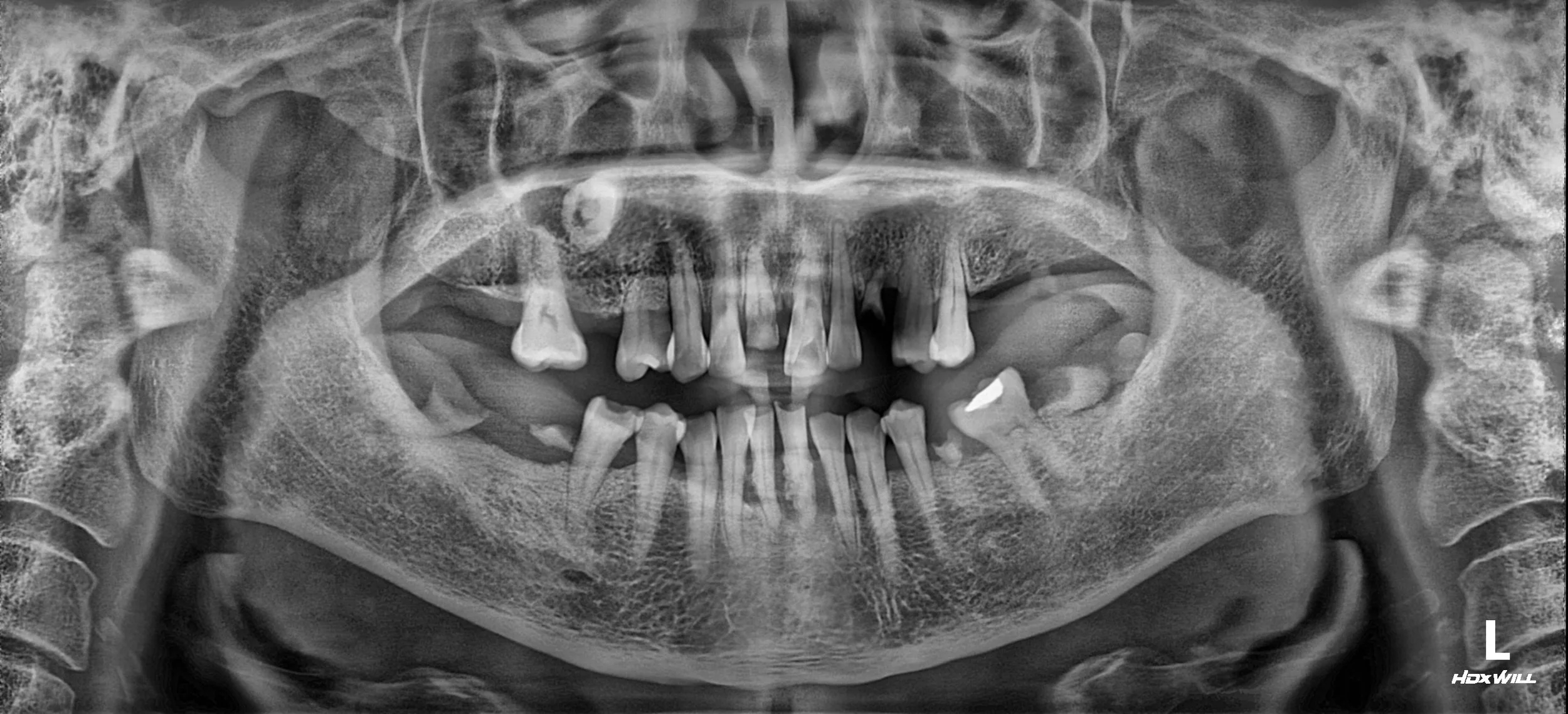
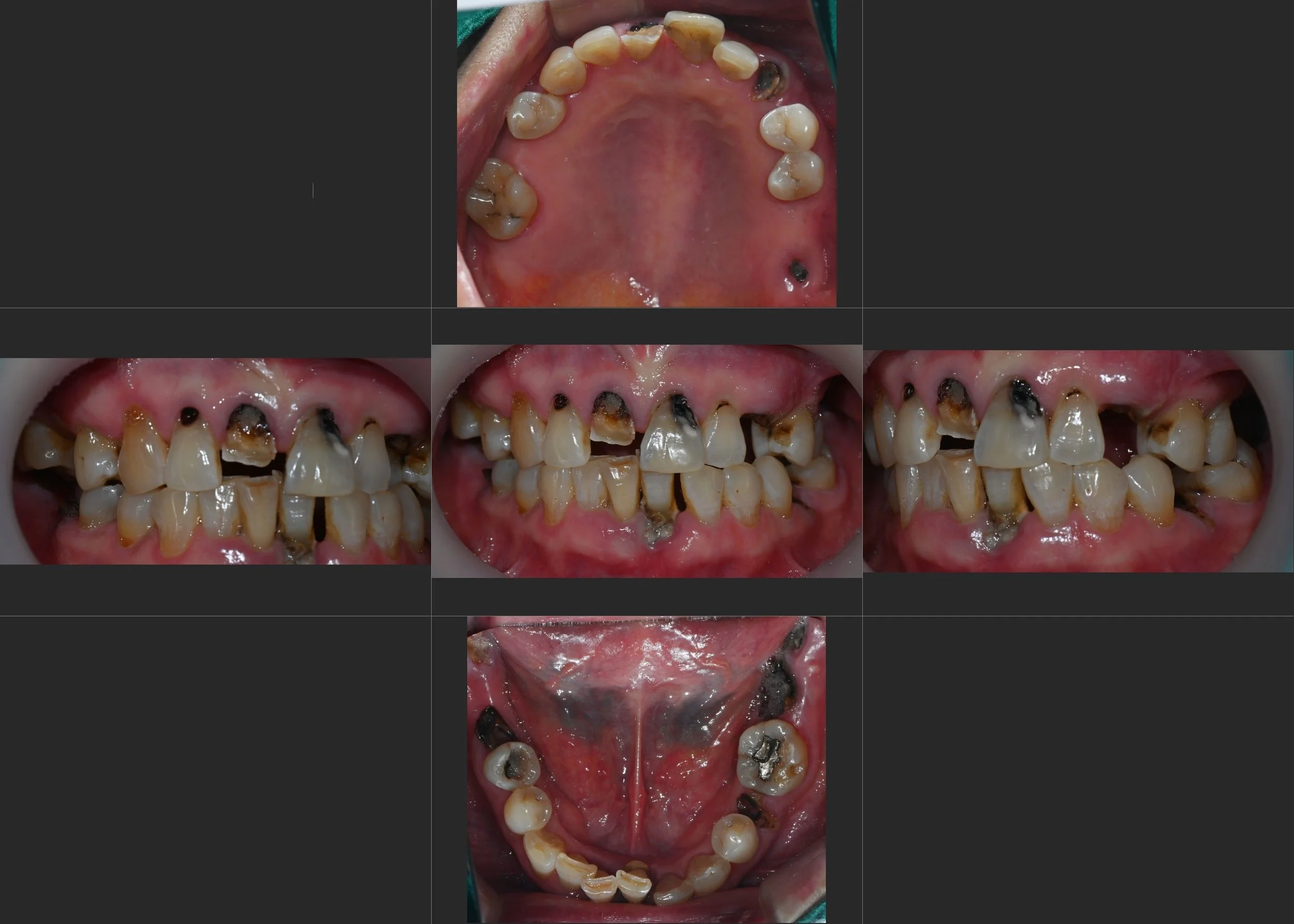
A female patient in her 50s presented with significant functional impairment due to extensive tooth loss, generalized severe periodontitis, and multiple dental caries. Her occlusal plane was completely collapsed, leading to an unstable bite and reduced chewing efficiency.
The patient's primary goal was functional recovery. She strongly preferred to preserve her remaining natural teeth whenever possible and requested that dental implants be placed only in essential edentulous areas. While esthetics were a secondary concern for the patient, the comprehensive treatment required for functional restoration inevitably led to a significant esthetic improvement.
OPG - BEFORE
INTRA ORAL - BEFORE
Treatment Objectives
Functional Restoration : To re-establish a stable occlusal plane and restore chewing function.
Preservation of Natural Teeth : To maximize the use of salvageable natural teeth as abutments for prosthetic restorations, combined with periodontal therapy.
Strategic Implant Placement : To place dental implants only in strategic positions where natural teeth were missing or non-restorable, providing essential support for the prostheses.
Occlusal Stability : To establish stable posterior stops at an appropriate vertical dimension.
Cost-Effective Planning : To address the patient's financial concerns by strategically omitting second molars while ensuring functional stability with premolar and first molar occlusion.
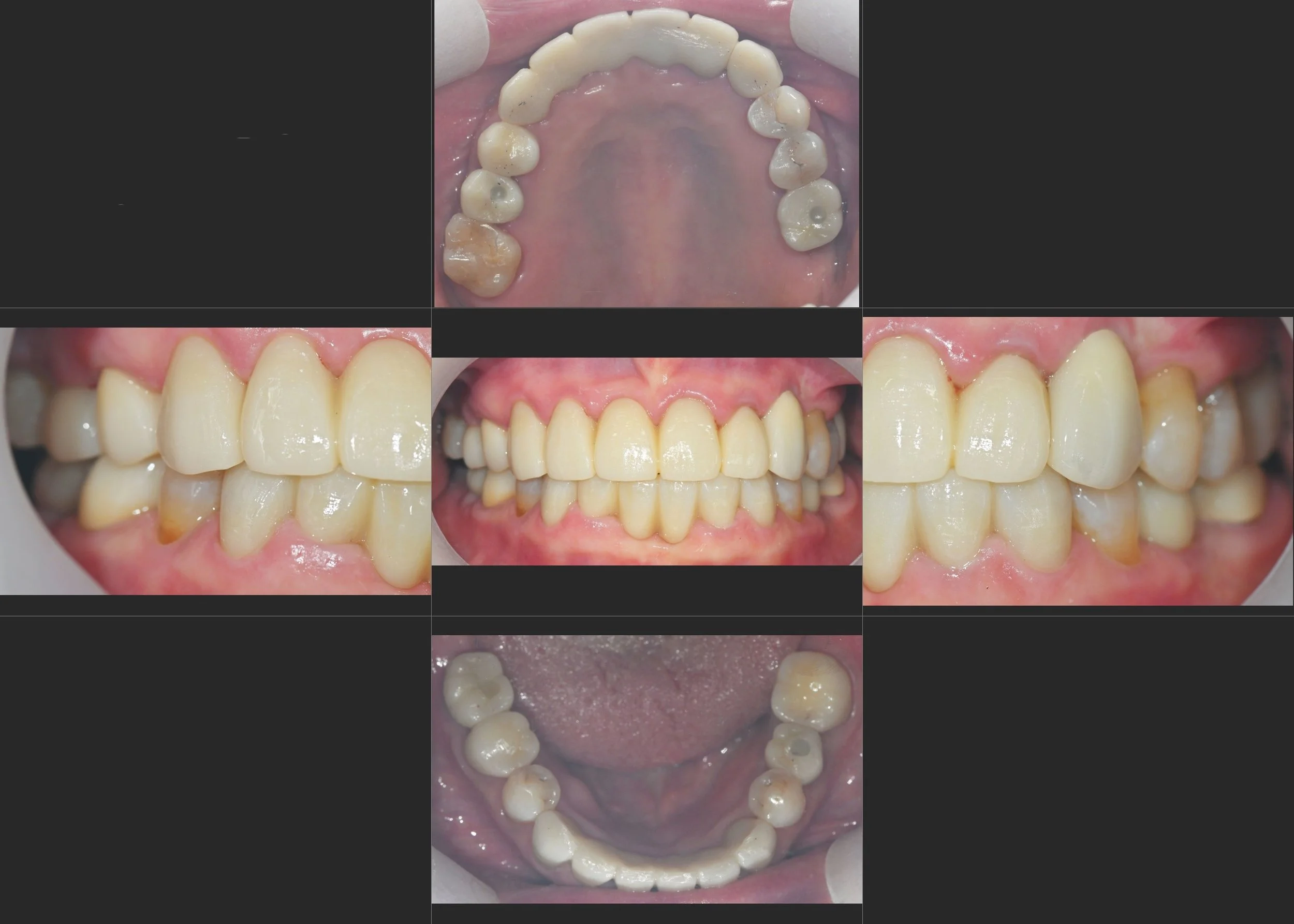
INTRA ORAL - AFTER
Treatment Approach
A phased treatment plan was developed and executed. Initially, comprehensive periodontal therapy was performed to stabilize the foundation, along with the removal of hopeless teeth and caries control on salvageable teeth.
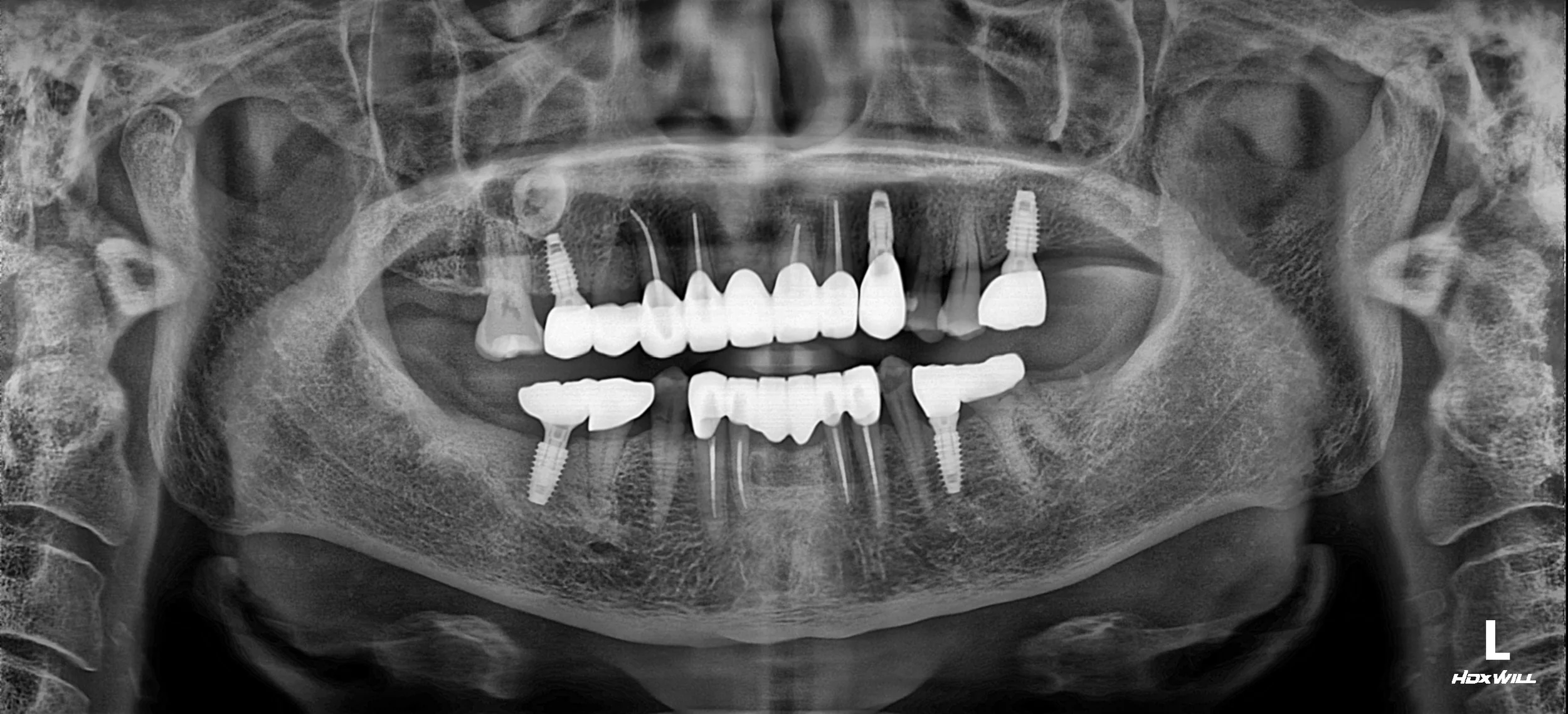
Following initial stabilization, a combination of implant-supported and tooth-supported fixed prostheses was planned. Strategic implants were placed in the posterior segments of both arches to provide posterior support. Remaining natural teeth were prepared to serve as abutments for crowns and bridges.
A key aspect of this case was establishing a new, functional vertical dimension of occlusion. The final prostheses were fabricated to provide stable posterior occlusion on the premolars and first molars. Although the second molars were omitted due to cost considerations, this arrangement successfully achieved a stable posterior stop, fulfilling the patient's functional requirements and providing a satisfactory esthetic outcome.
