
13. First VDO Elevation: Systematic Recovery of Occlusal Space and TMJ Function
Case Summary
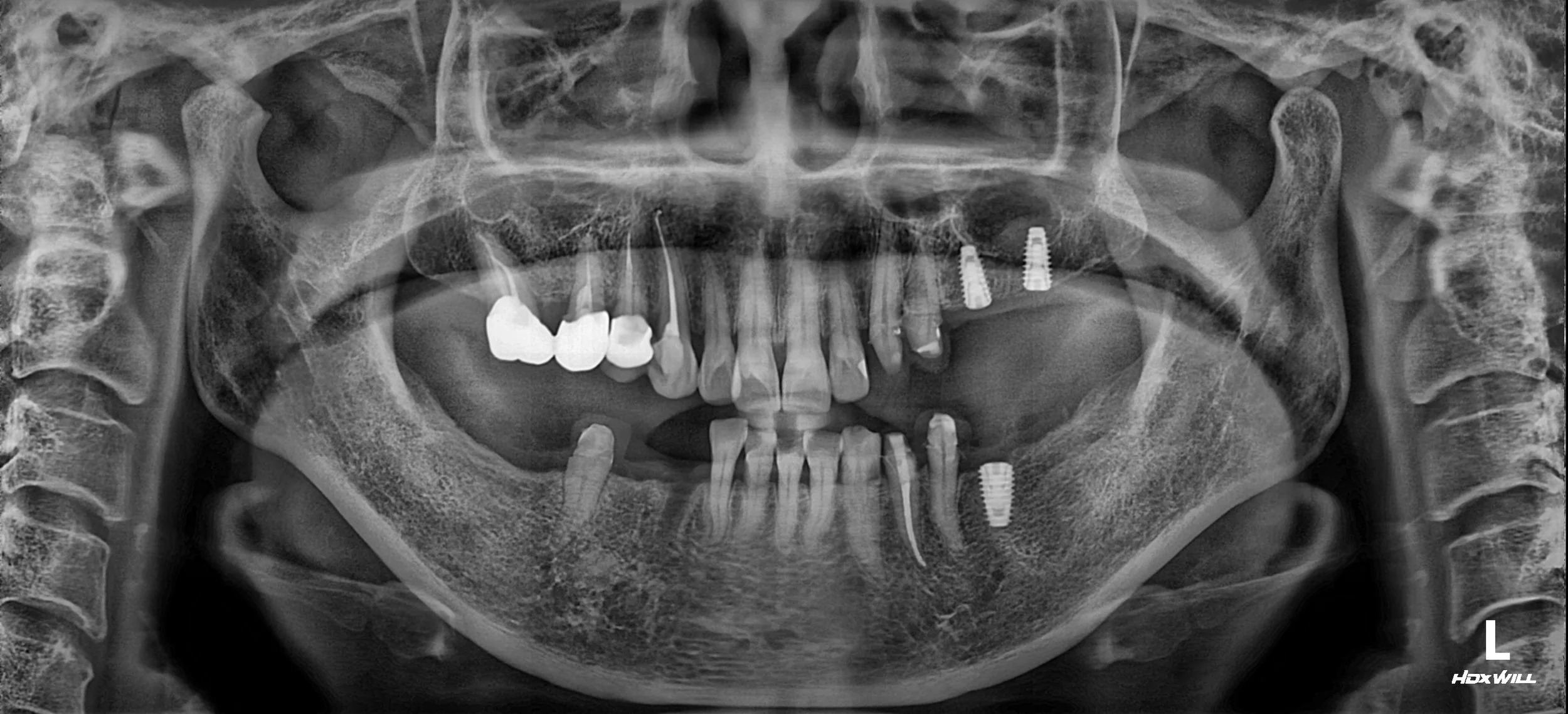
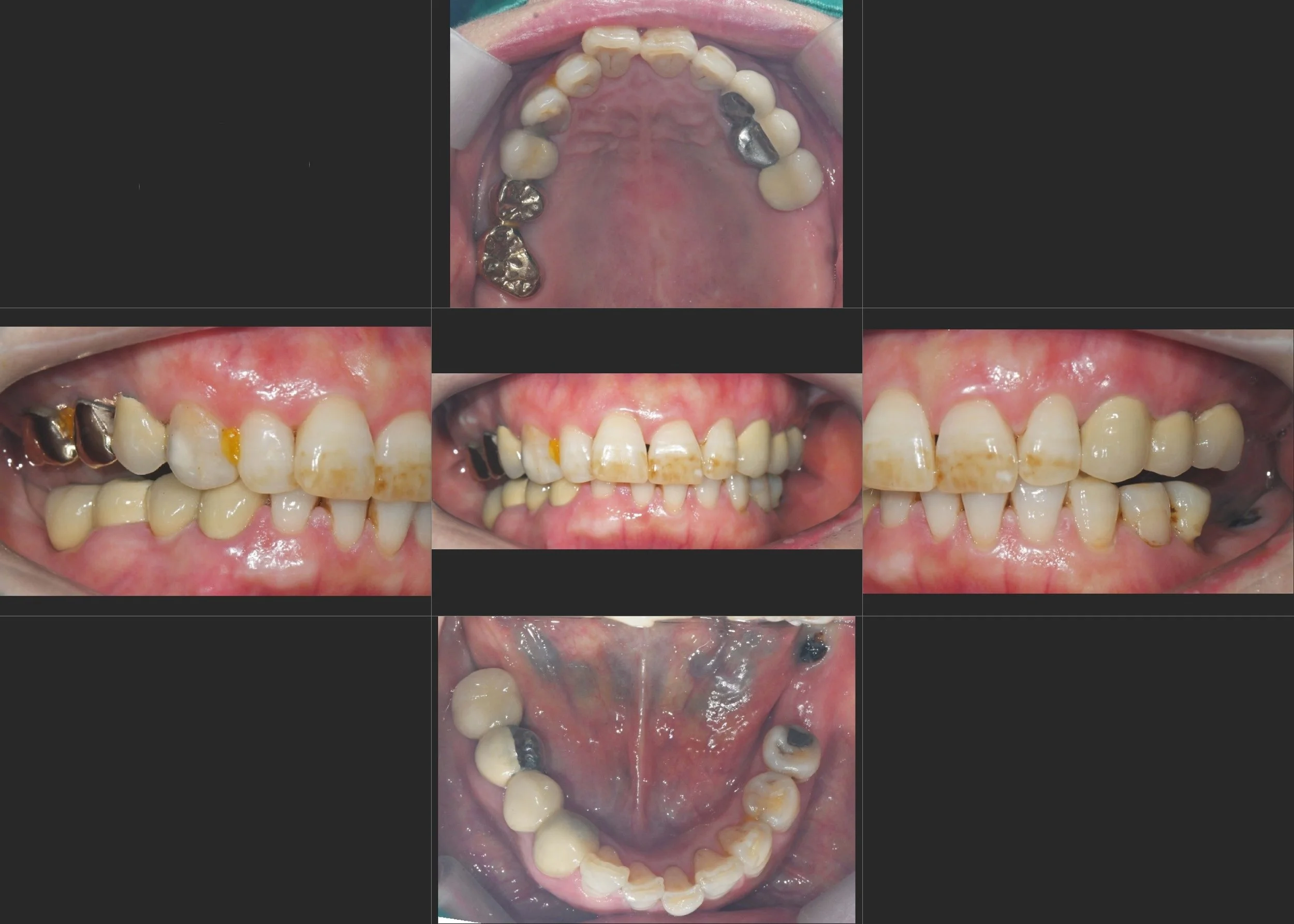
A female patient in her 50s presented with a severely compromised posterior occlusion and significant clinical challenges. The primary issues included:
Insufficient Occlusal Space: Severe loss of vertical dimension made it nearly impossible to place functional posterior prosthetics.
Mandibular Distal Displacement: Posterior tooth loss had led to a backward shift of the mandible, resulting in chronic TMJ symptoms.
Limited Mouth Opening (Trismus): The patient suffered from restricted jaw movement, significantly impacting her quality of life.
OPG - BEFORE
INTRA ORAL - BEFORE
Treatment Objectives
VDO Elevation: To create adequate restorative space for posterior prostheses.
Mandibular Repositioning: To alleviate TMJ pressure by guiding the mandible into a more physiologically stable, forward position.
Restoration of Jaw Mobility: To resolve the patient's trismus and allow for normal mouth opening.
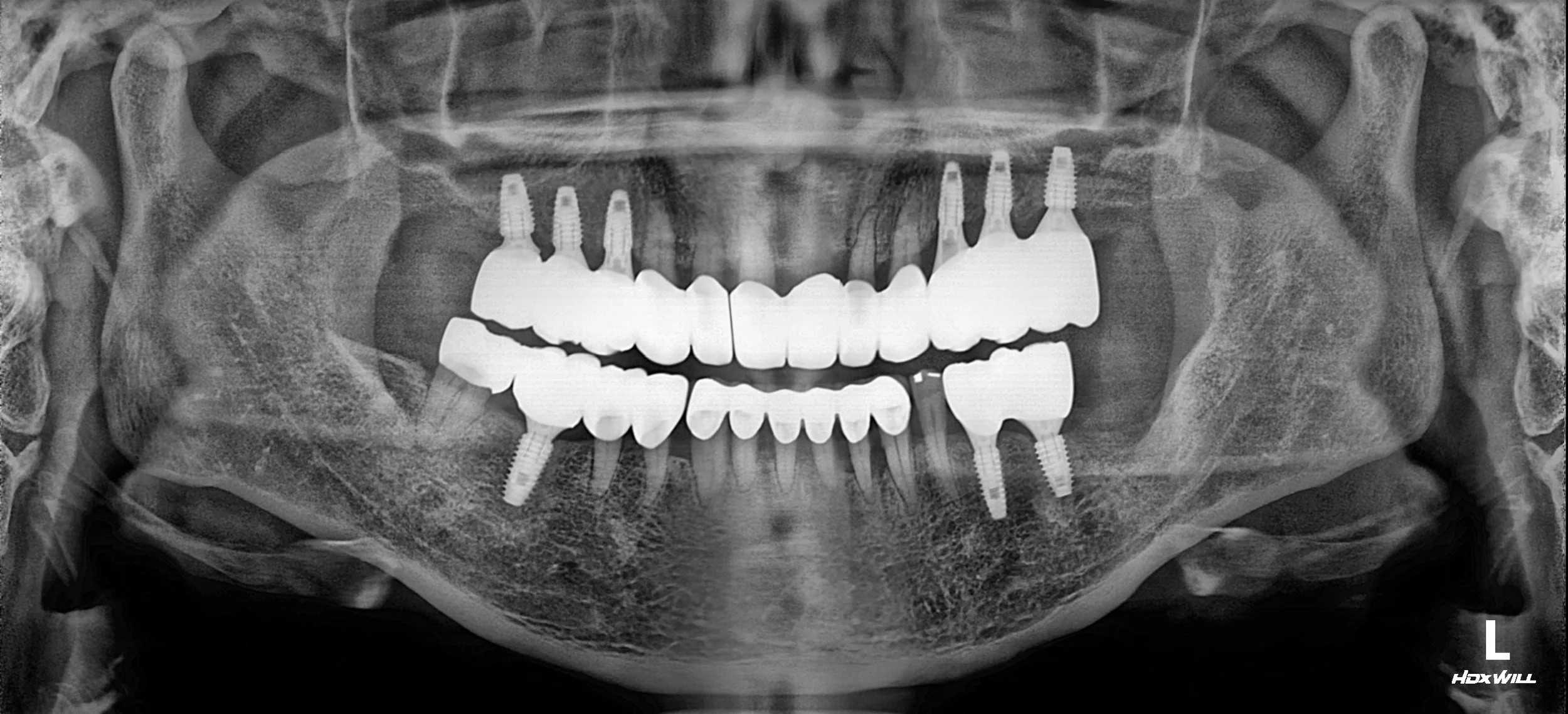
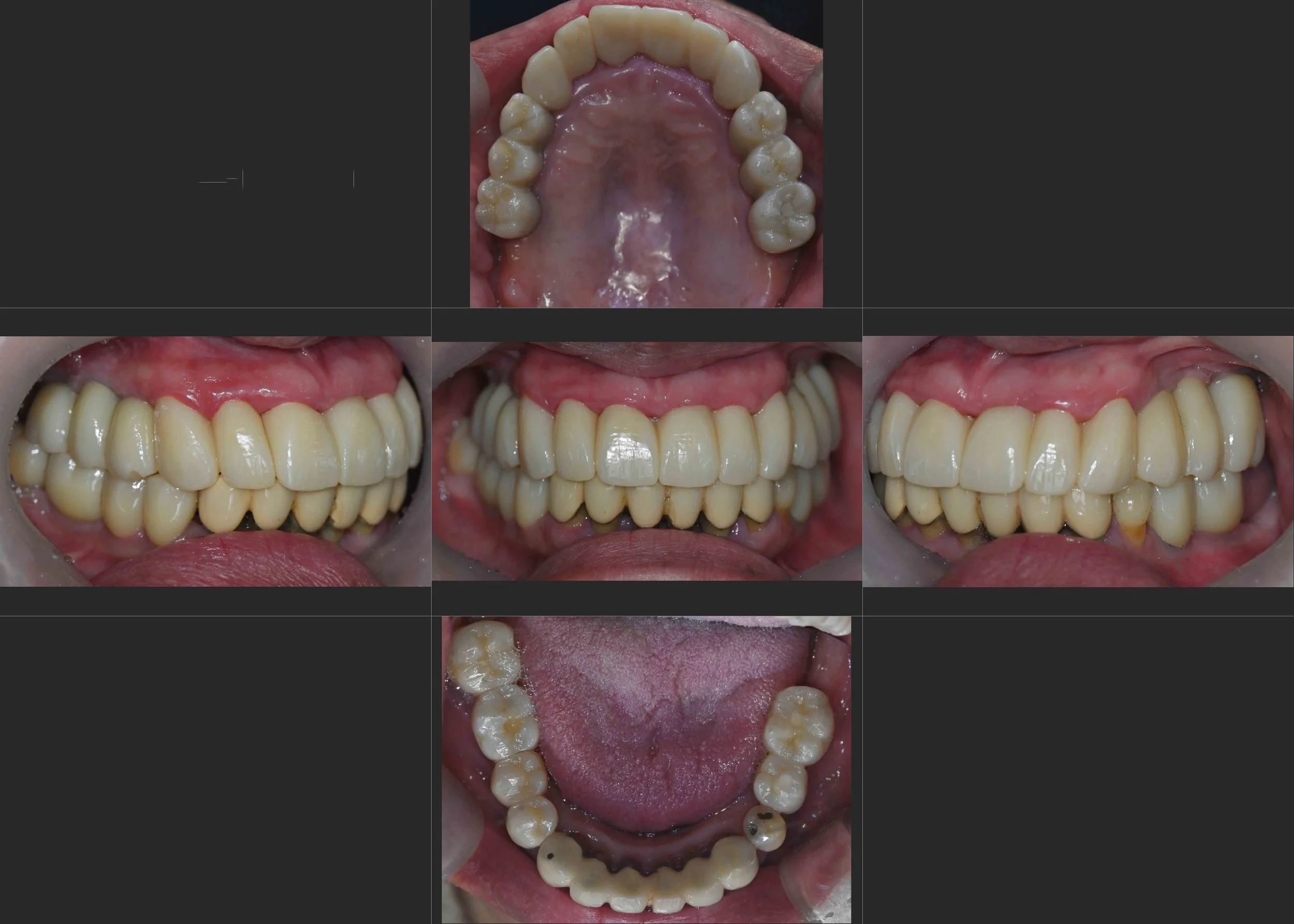
Functional Reconstruction: To provide stable posterior support and a sustainable occlusal scheme.
INTRA ORAL - AFTER
Treatment Approach
This case represented a significant clinical turning point. During the diagnostic phase, intraoral photographs were taken with the patient’s mandible slightly protruded. Remarkably, this forward position showed high reproducibility and suggested a potential path for reconstruction.
Using this new mandibular position as a reference, the Vertical Dimension of Occlusion (VDO) was elevated. This shift not only provided the necessary space for the new prosthetics but also yielded an unexpected and highly successful clinical outcome: the immediate improvement of TMJ symptoms and the complete resolution of the patient's limited mouth opening.
Although comprehensive records from the very beginning of the process are limited, this case provided invaluable clinical insight into a patient's adaptive capacity to VDO changes. The patient expressed profound satisfaction with her ability to open her mouth freely for the first time in years, providing strong clinical validation for this reconstructive approach.
