
30. Strategic Full Mouth Rehabilitation: Balancing Clinical Goals and Financial Constraints
Case Summary
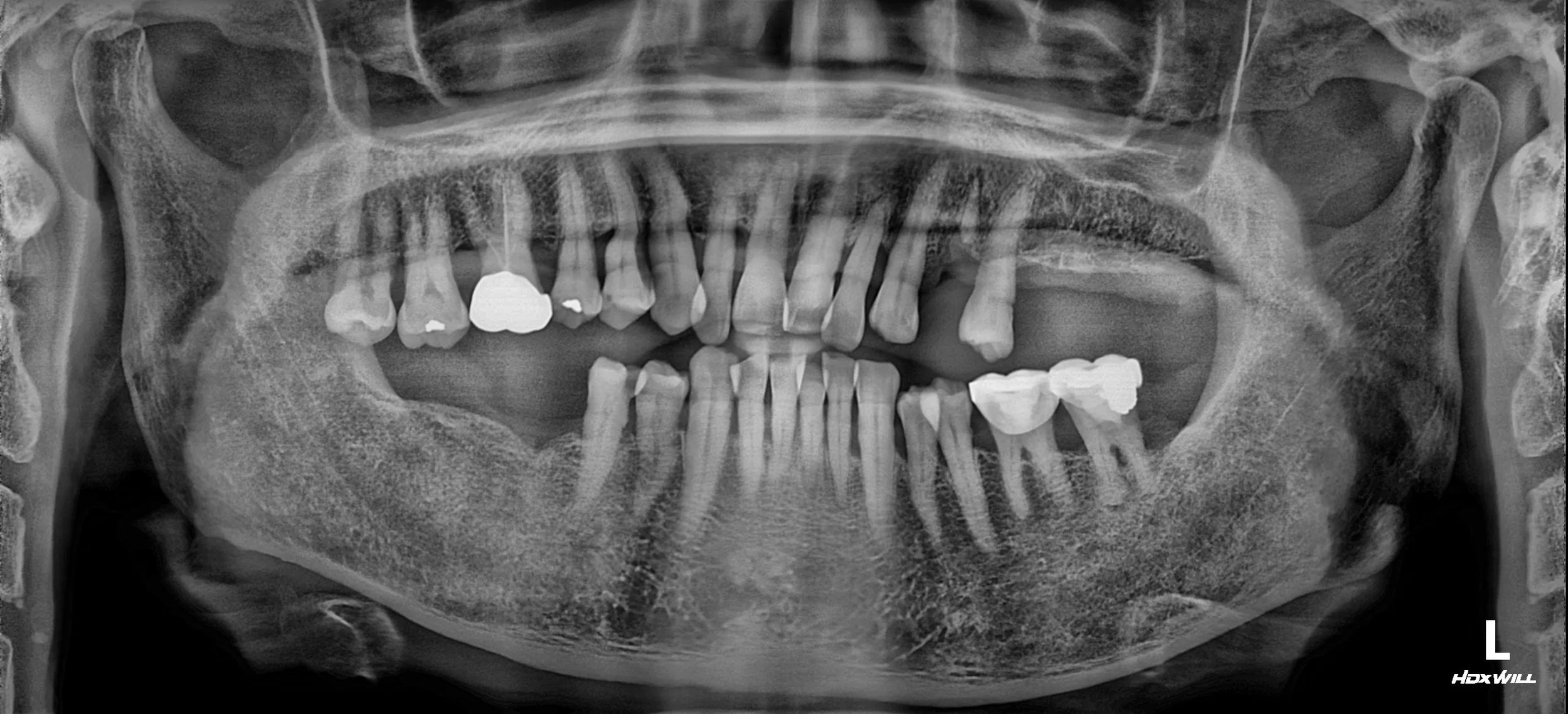
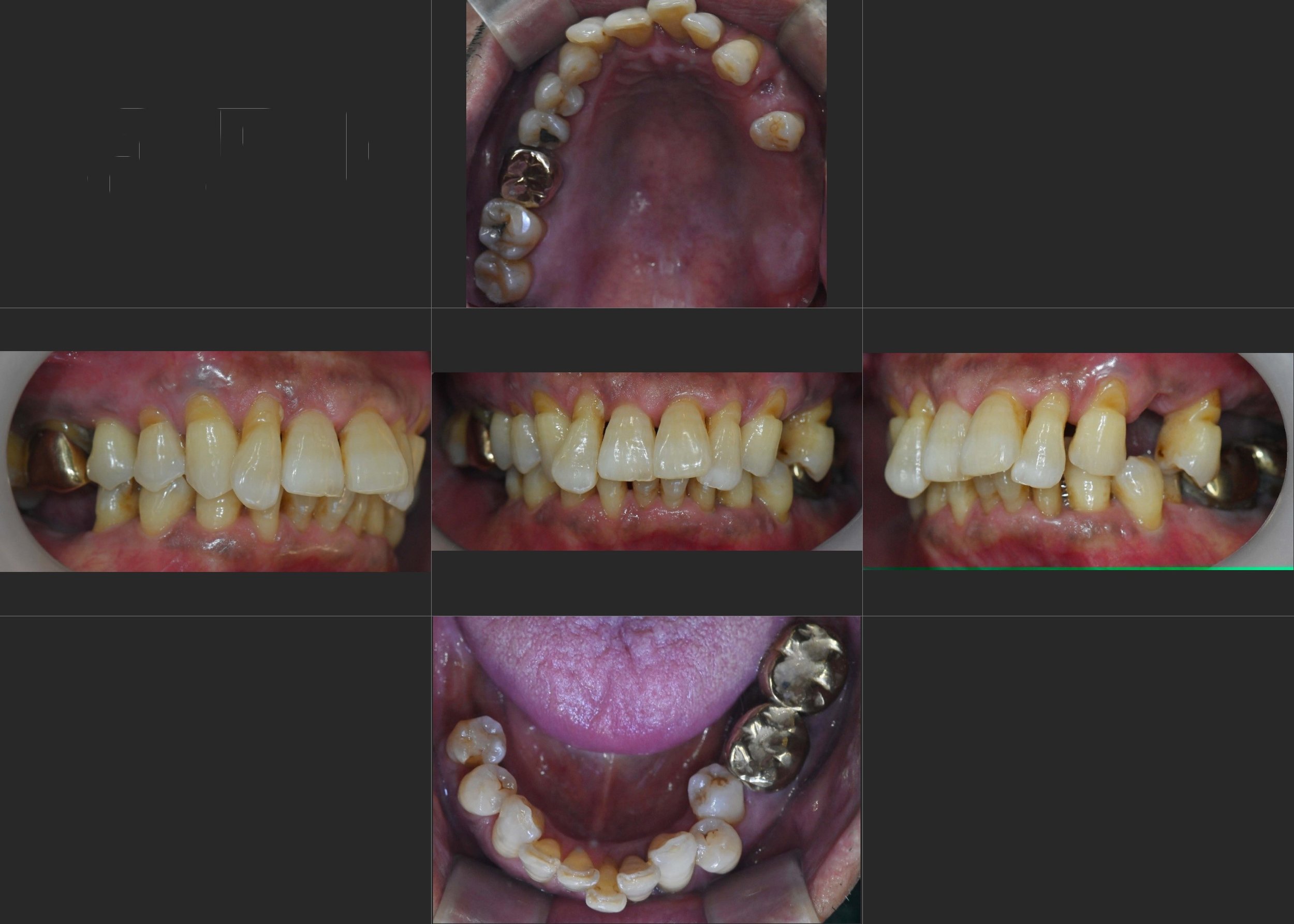
A male patient in his 70s presented with a severely compromised dentition and a collapsed bite. The clinical presentation included significant tooth wear, missing posterior units, and a loss of Vertical Dimension of Occlusion (VDO).
Due to financial constraints, a strategic treatment plan was required. The primary challenge was to restore stable function and improve aesthetics while being mindful of the patient's budget. The patient's priority was to regain chewing efficiency and improve the appearance of his worn anterior teeth with minimal extractions.
OPG - BEFORE
INTRA ORAL - BEFORE
Treatment Objectives
VDO Elevation: To recover the lost vertical dimension, providing space for both functional and aesthetic restorations.
Strategic Posterior Support: To restore occlusion up to the first molars (#6s), providing sufficient masticatory efficiency while optimizing the treatment cost.
Conservative Aesthetic Recovery: To improve the anterior smile line through prosthetic intervention while adhering to a "minimal extraction" strategy.
Sustainable Occlusion: To establish a stable, maintainable bite relationship that prevents further wear and protects the remaining natural teeth.
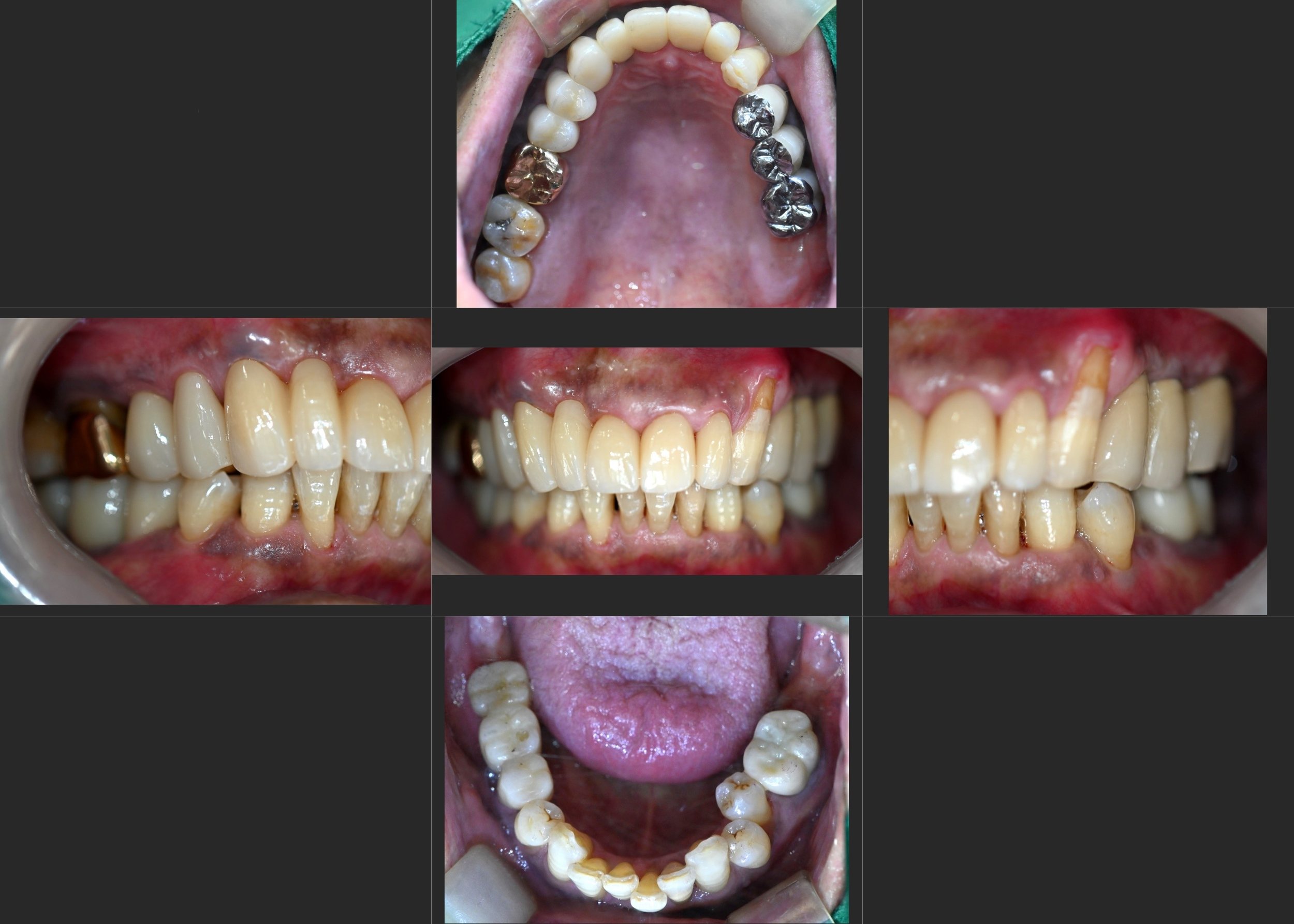
INTRA ORAL - AFTER
Treatment Approach
The rehabilitation was focused on achieving the highest functional impact with a minimalist restorative footprint:
Systematic VDO Raise: The treatment began by establishing a new, stable vertical dimension. This was critical to accommodate the restorative materials and to relieve the stress on the TMJ and anterior segment.
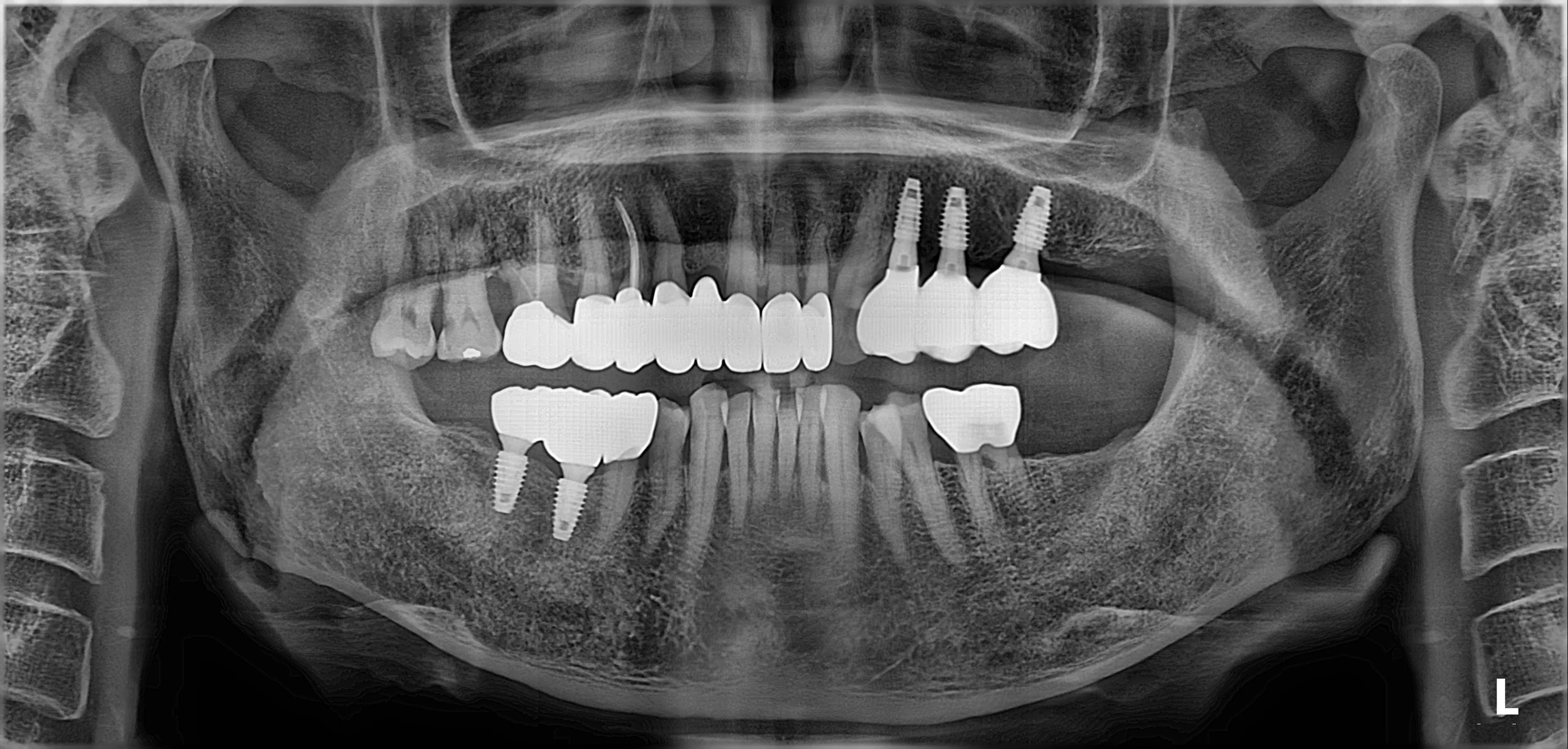
Strategic Posterior Stops: Dental implants and bridges were placed to restore function up to the first molars (#6). By intentionally omitting the second molars, we were able to provide the patient with nearly 90% of his original chewing capacity while significantly reducing the total treatment cost.
Anterior Aesthetic Realignment: The worn anterior teeth were restored using ceramic crowns. By focusing on preserving the natural tooth structure wherever possible, we achieved a natural-looking rejuvenation that significantly boosted the patient’s confidence.
Force Management: The final occlusal scheme was designed to be "maintenance-friendly." Forces were distributed evenly across the new posterior stops, ensuring that the restored anterior teeth are protected from excessive functional loads.
The result is a functional, stable, and aesthetically pleasing outcome that respects both the patient’s clinical needs and his financial parameters.
