
15. Bilateral Full Mouth Rehabilitation: Transitioning from Failing Dentures to Stable Fixed Prosthetics
Case Summary
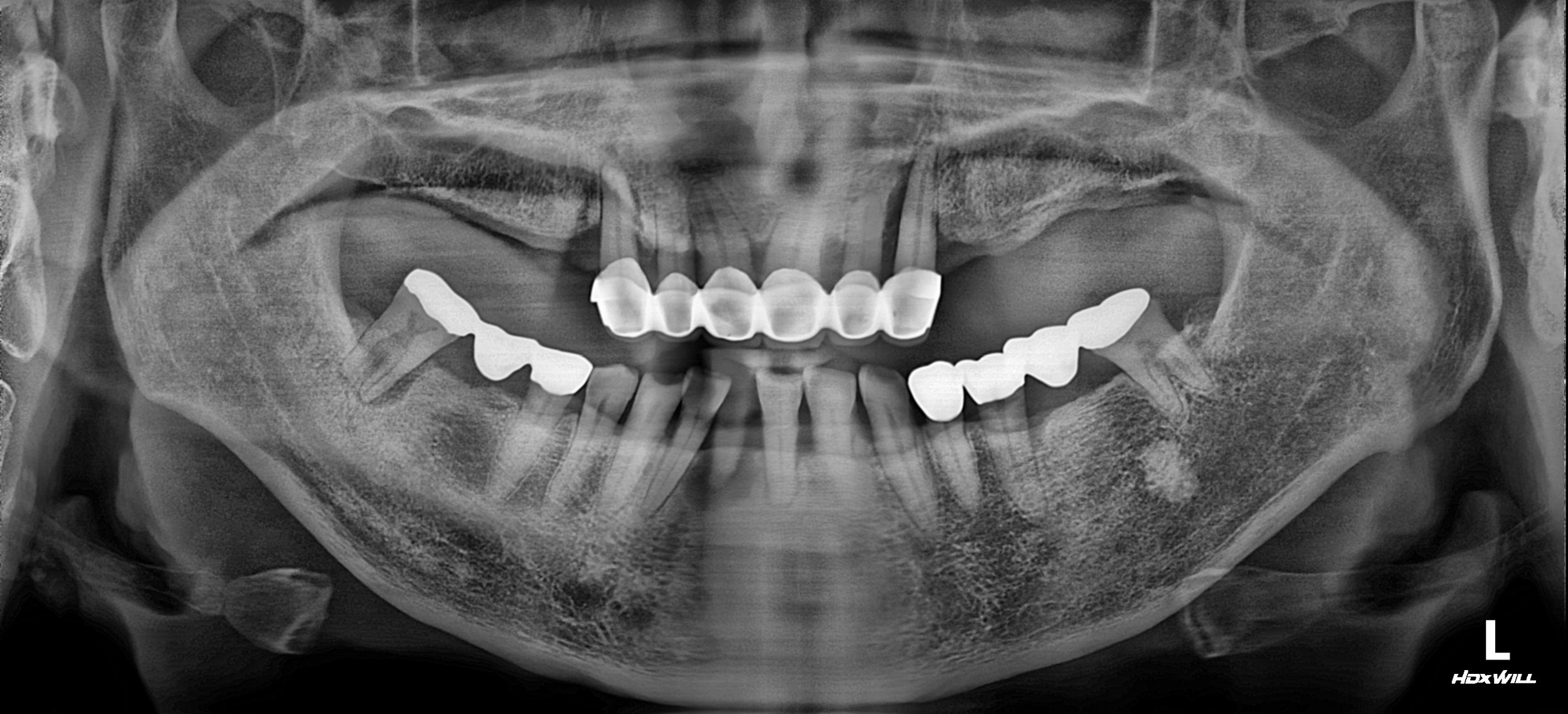
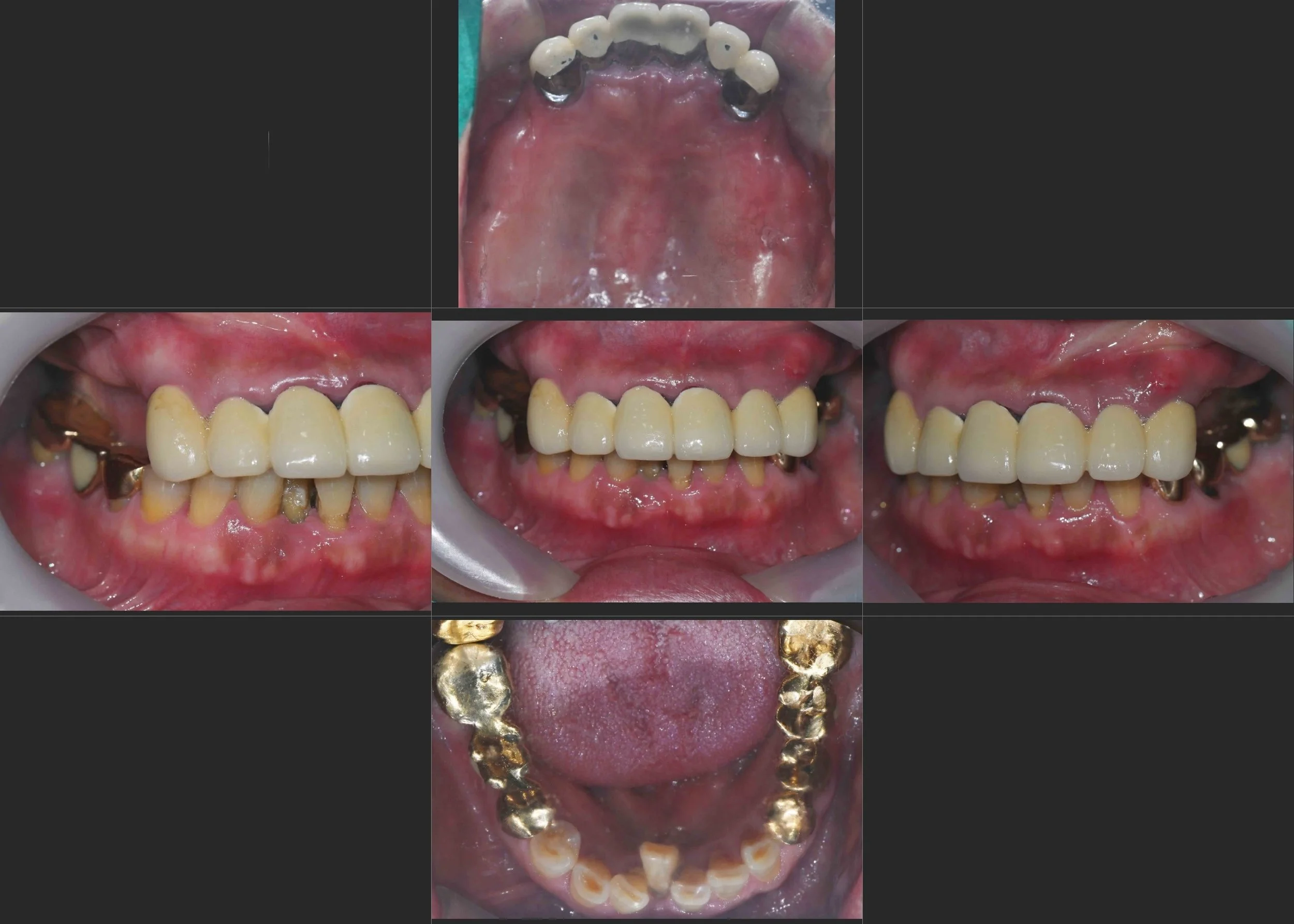
A male patient in his 60s presented with a severely compromised oral condition. Having relied on ill-fitting and unusable partial dentures for a long period, his remaining dentition had deteriorated significantly. Key clinical findings included:
Failing Anterior Bridge: The existing maxillary anterior bridge exhibited significant mobility due to the poor condition of the abutment teeth.
Severe Mandibular Crowding: Due to long-term posterior tooth loss and lack of space, the mandibular anterior teeth showed significant lingual displacement (lingual position).
Occlusal Collapse: The loss of posterior support led to a collapse in the vertical dimension, making functional chewing impossible.
Abutment Degradation: Most remaining teeth that previously served as denture or bridge supports were no longer restorable.
OPG - BEFORE
INTRA ORAL - BEFORE
Treatment Objectives
VDO Elevation: To recover the lost vertical dimension of occlusion, creating space for functional and aesthetic restorations.
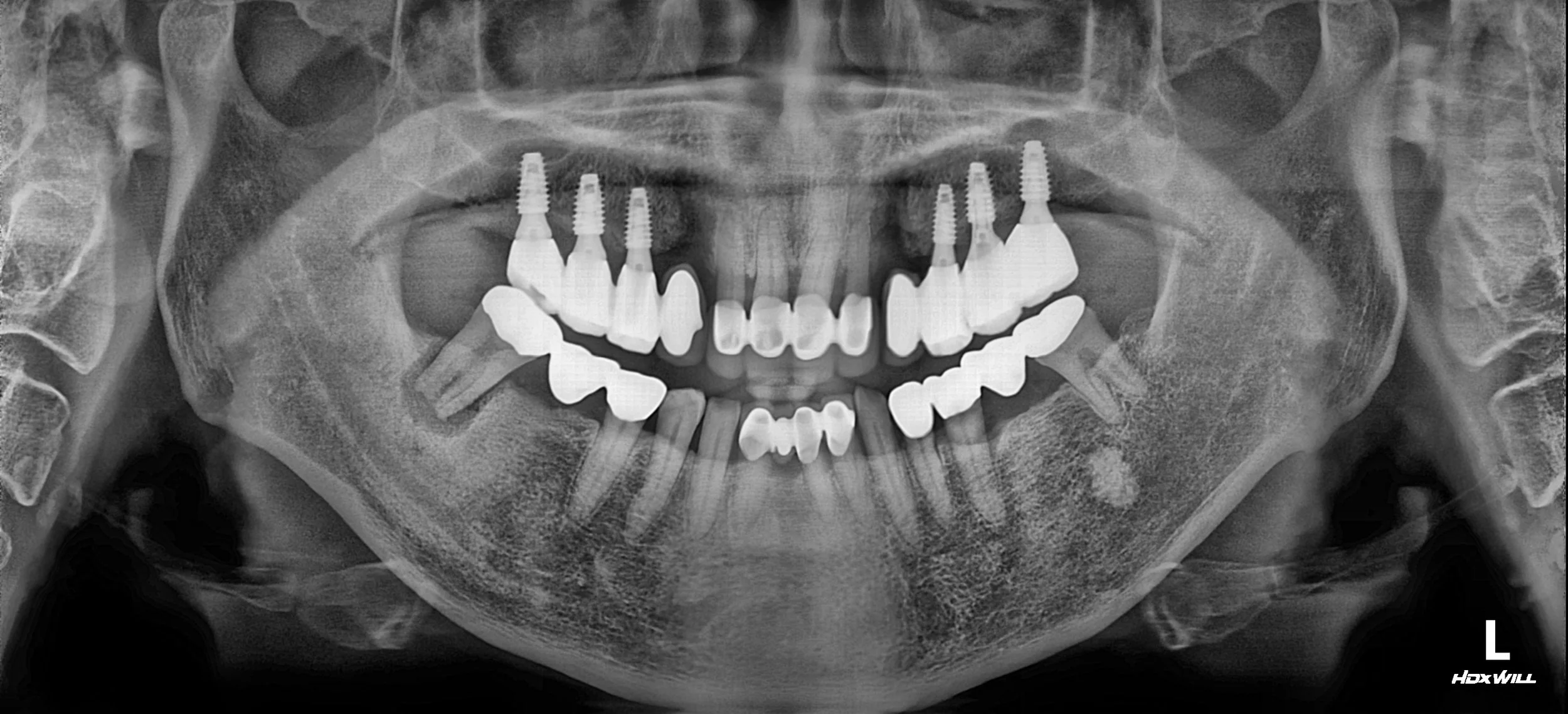
Fixed Reconstruction: To transition the patient from unstable removable dentures to a predictable, implant-supported fixed prosthesis.
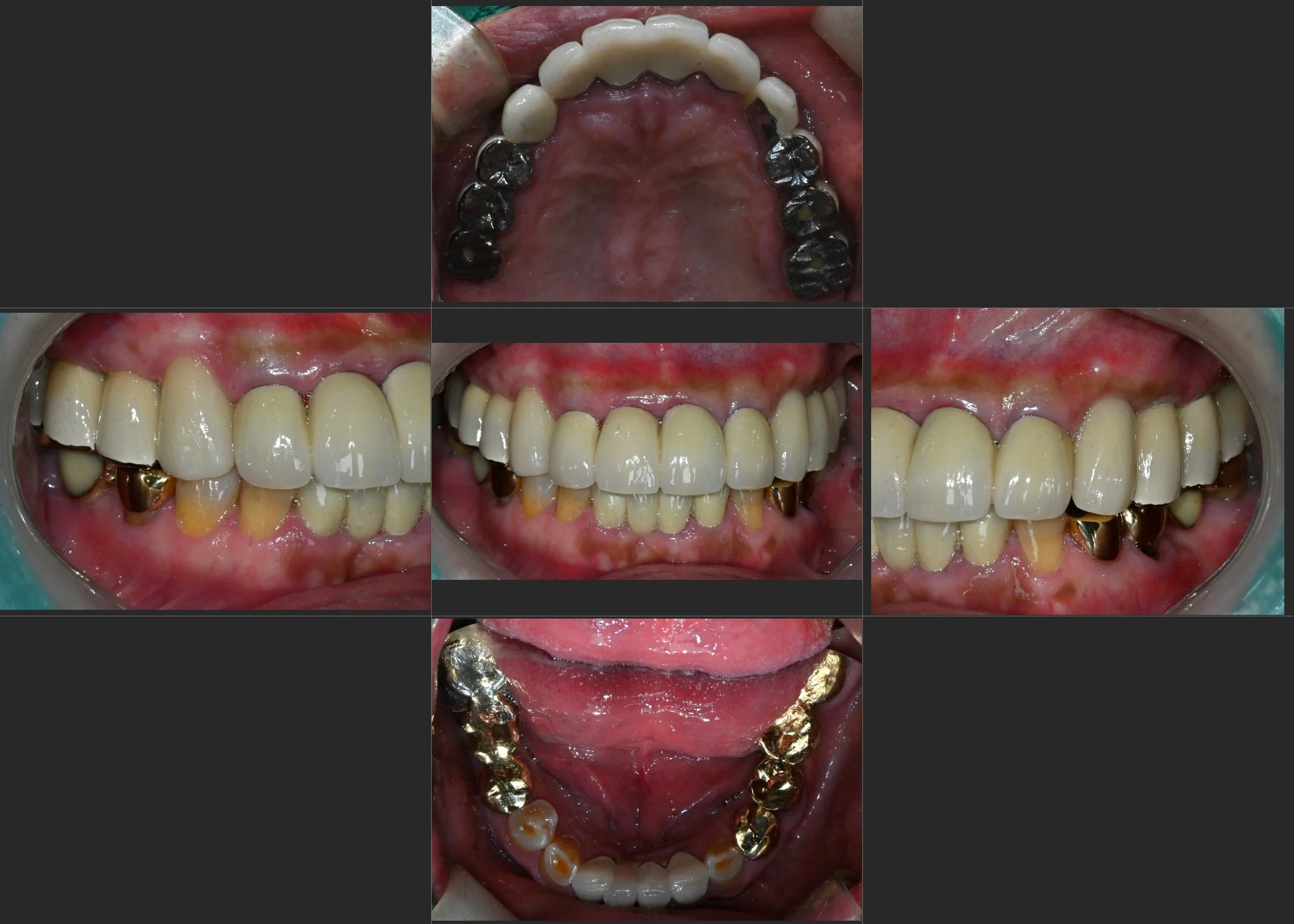
Anterior Aesthetic Recovery: To replace the failing maxillary bridge and address the mandibular crowding/lingual displacement.
Bilateral Stability: To establish a balanced, bilateral posterior occlusion that ensures long-term durability.
INTRA ORAL - AFTER
Treatment Approach
The rehabilitation was approached systematically to ensure both functional and structural success:
Stabilization Phase: Removal of non-restorable abutments. Temporary restorations were provided to manage immediate aesthetics and begin vertical dimension adaptation.
Implant Surgery: Dental implants were strategically placed in the maxillary and mandibular posterior segments to provide a firm foundation for the new occlusion.
VDO Management & Realignment: The occlusal vertical dimension was elevated. This provided the necessary clearance to properly align the mandibular anterior teeth, effectively addressing the previous lingual displacement.
Final Prosthetics & Clinical Observation: Precision-milled, implant-supported bridges were delivered. A notable observation during this phase was that once the stable occlusion was established, the pre-existing issues in the non-functional 40s quadrant (lower right) became more clinically prominent. While these teeth were not part of the primary functional unit previously, the new occlusal scheme highlighted the need for future intervention.
Phased Planning (Financial Consideration): Although further treatment for the 40s quadrant is indicated, the procedure has been deferred at the patient's request due to financial constraints. The case currently remains in a stable, functional state with a planned "maintenance and monitoring" approach for the lower right segment.
