
25. Comprehensive Full-Arch Rehabilitation: Re-establishing Occlusal Harmony in Advanced Periodontitis
Case Summary
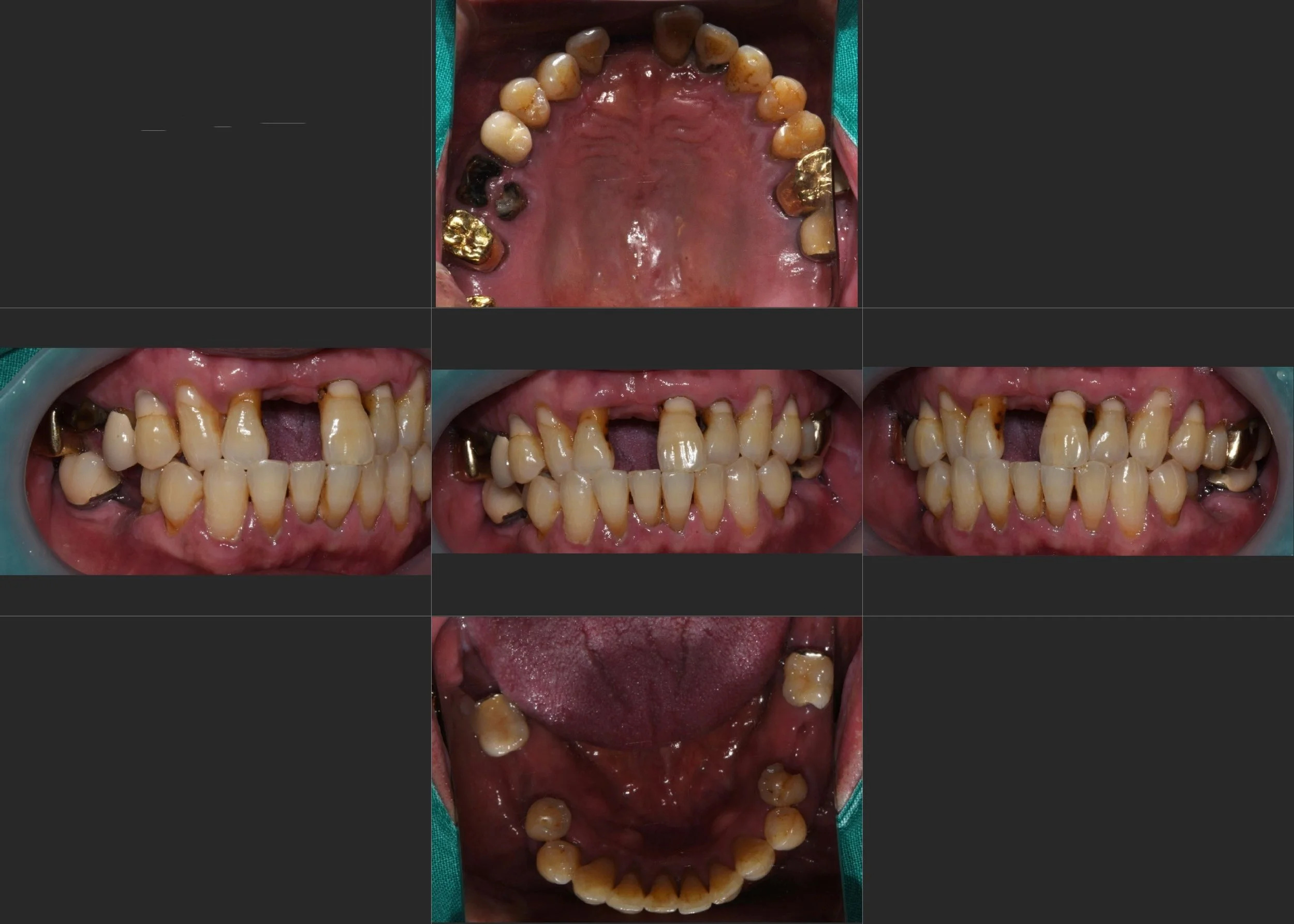
A male patient in his 50s presented with advanced generalized periodontitis and multiple failing restorations. The clinical situation was complicated by:
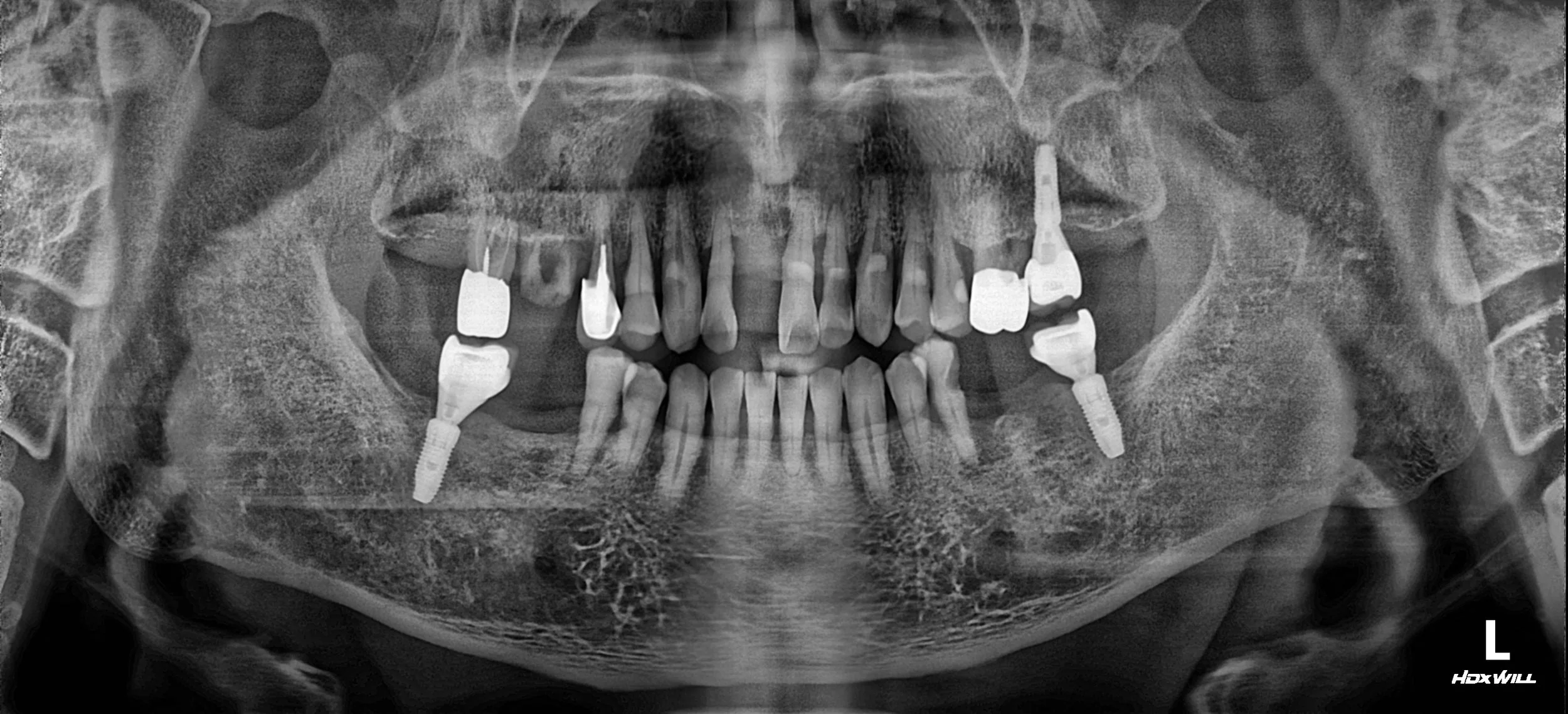
Severe Periodontal Disease: Extensive horizontal and vertical bone loss affecting almost all remaining natural teeth.
Failing Existing Implants: Previously placed implants required prosthetic replacement due to mechanical failure and poor occlusal alignment.
Disorganized Occlusal Plane: The lack of posterior support and irregular tooth wear had led to a complete breakdown of the functional occlusal relationship.
OPG - BEFORE
INTRA ORAL - BEFORE
Treatment Objectives
Periodontal Stabilization: To achieve a healthy, inflammation-free environment through intensive periodontal therapy.
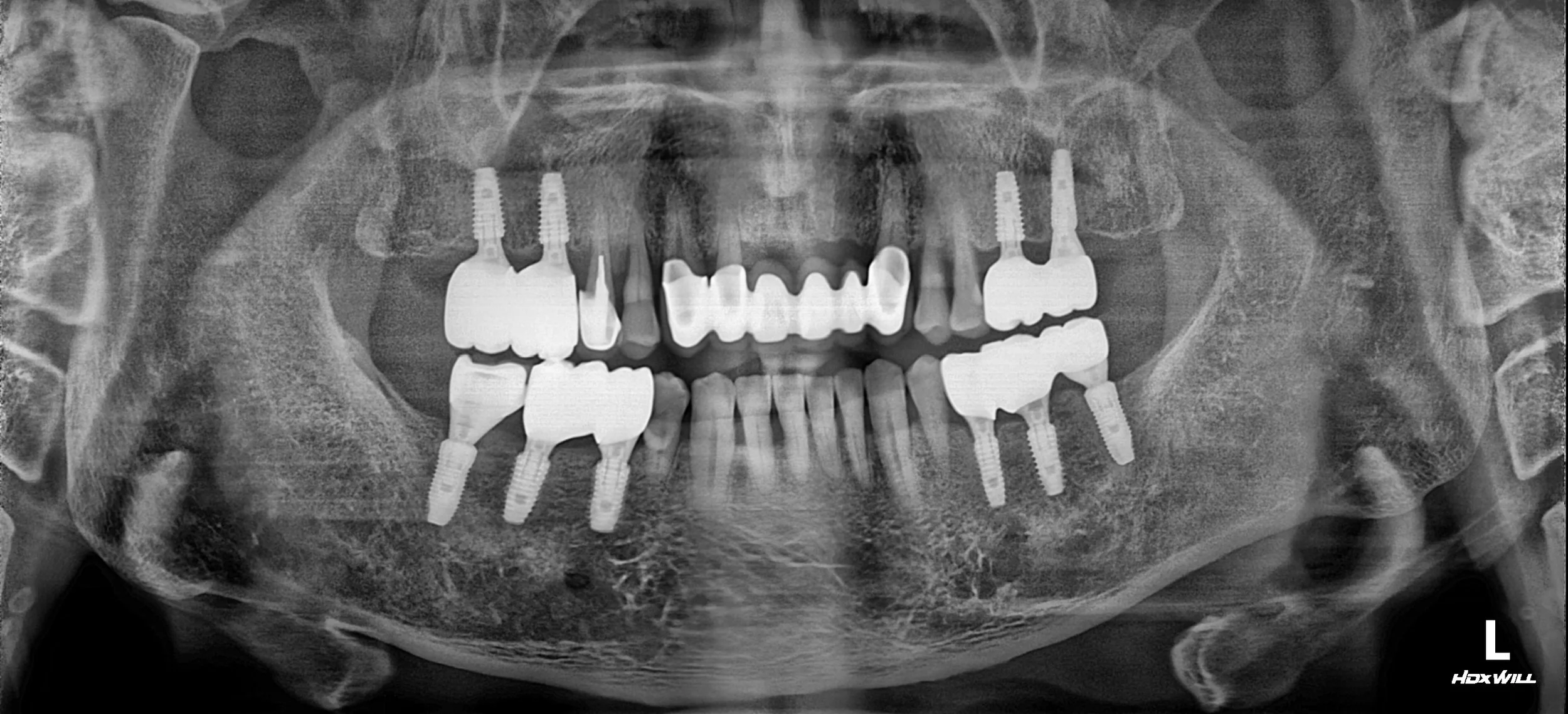
Prosthetic Re-intervention: To replace failing existing implant crowns and integrate them into a new, stable occlusal scheme.
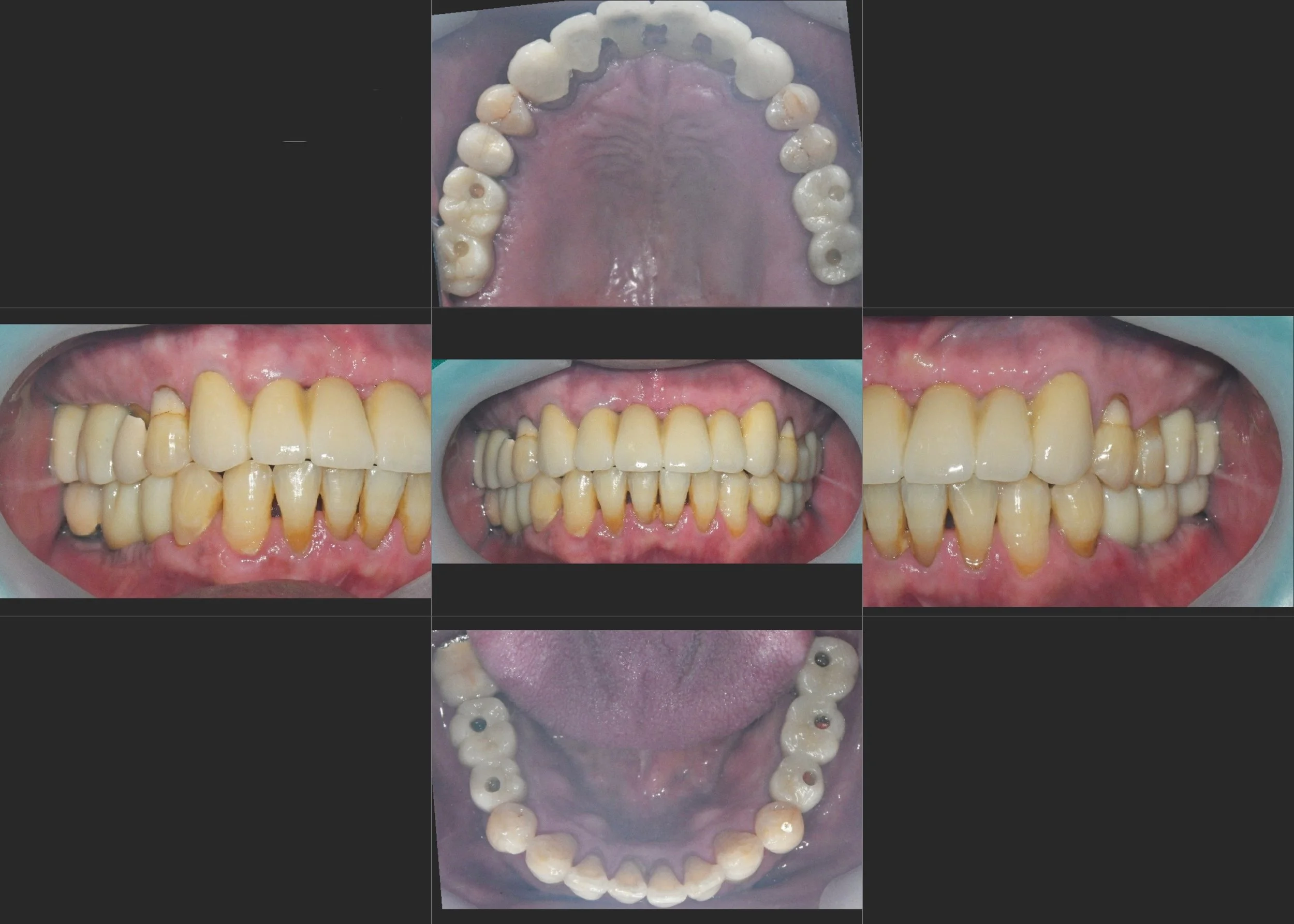
Occlusal Curve Correction: To re-establish proper Curve of Spee and Curve of Wilson for optimal masticatory function and interference-free movement.
Anterior Aesthetic Recovery: To restore the upper anterior segment using high-strength bridges, providing a natural and confident smile.
INTRA ORAL - AFTER
Treatment Approach
The treatment followed a meticulous sequence to ensure long-term sustainability:
Initial Stabilization: Comprehensive periodontal debridement was performed to control infection. Hopeless teeth were managed, and the foundation was secured.
Occlusal Height & Curve Establishment: Using the existing and newly placed implants, the Vertical Dimension (VDO) was stabilized. A particular focus was placed on creating an ideal occlusal curve to distribute forces evenly across the arches.
Adaptation Phase: The patient’s functional adaptation to the new occlusal scheme was monitored using long-term provisional restorations. This ensured the stability of the TMJ and neuromuscular system before finalization.
Definitive Restoration: Once the occlusion was stabilized, the final restorations were delivered. The anterior segment received ceramic bridges that were carefully contoured to harmonize with the patient’s facial features while maintaining functional integrity.
The result is a healthy, maintainable oral environment with a balanced occlusion and a significantly improved aesthetic profile.
