
34. Comprehensive Full-Arch Implant Rehabilitation: A Maintenance-First Approach
Case Summary
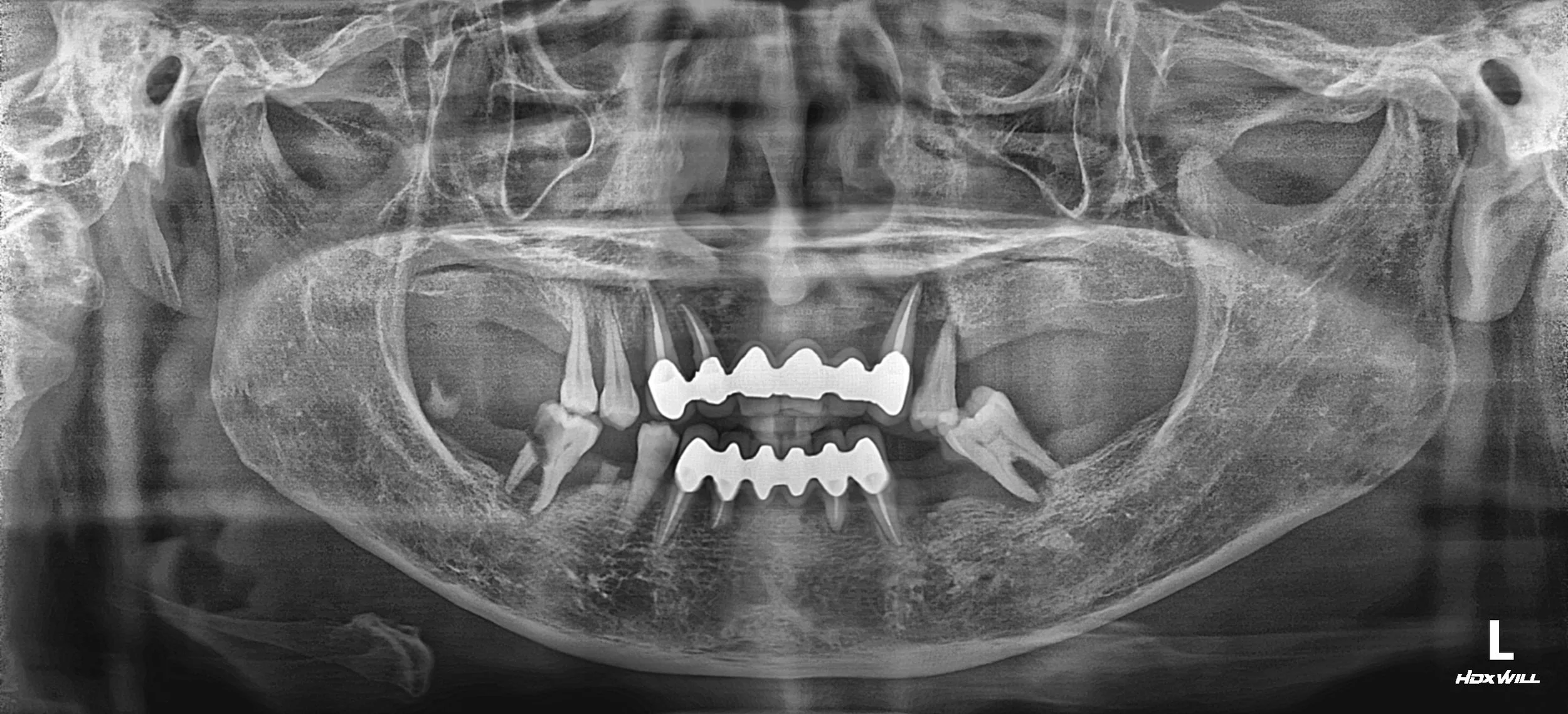
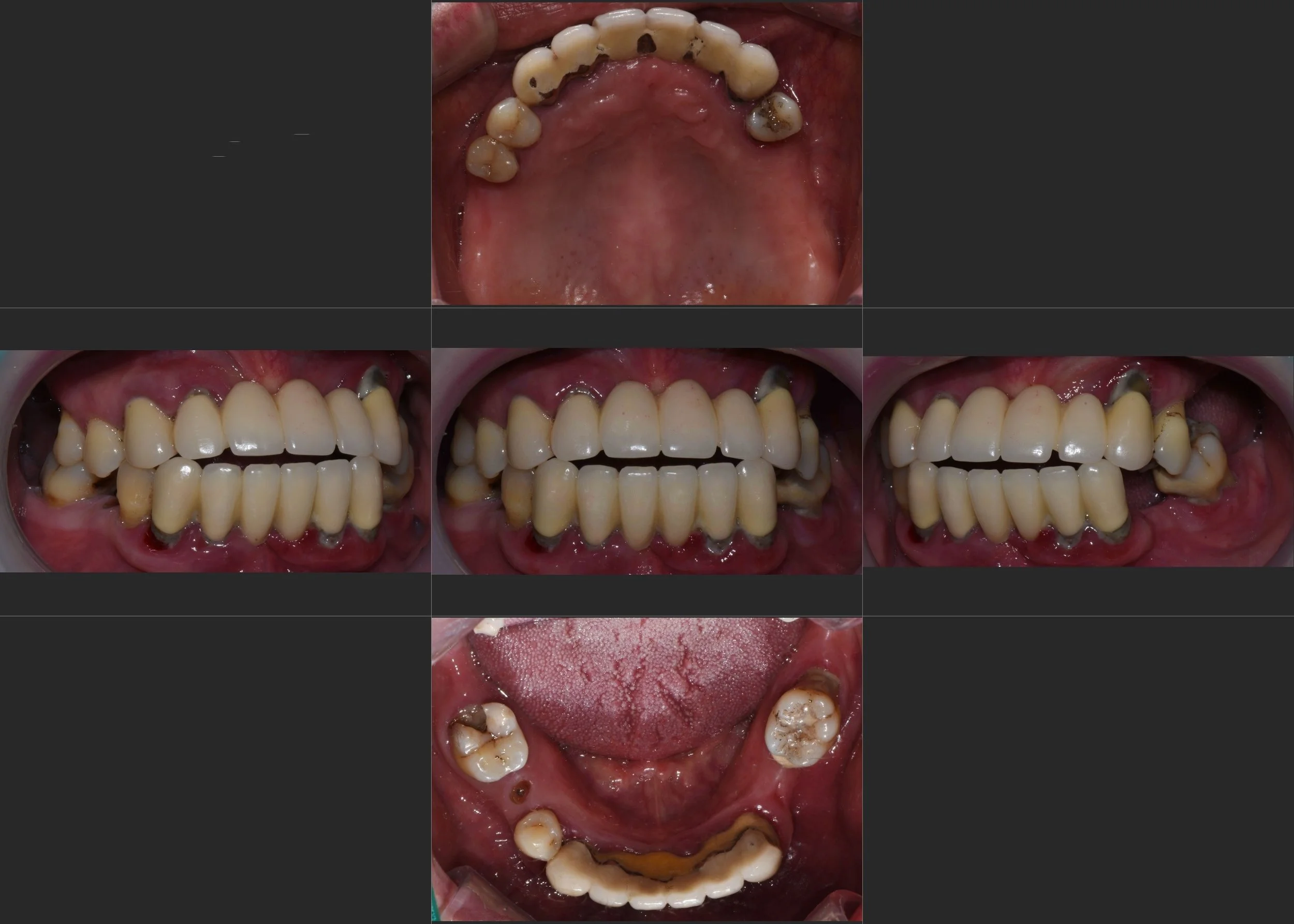
A female patient in her 60s presented with a severely compromised dentition and a completely collapsed occlusal relationship. Long-standing periodontal disease had led to:
Generalized Periodontal Breakdown: Extensive mobility and loss of supporting structures across both arches.
Poor Alveolar Bone Quality: Significant resorption of the alveolar ridge, complicating the foundation for implant placement.
Functional Failure: The patient suffered from an inability to chew effectively and expressed dissatisfaction with her facial aesthetics.
OPG - BEFORE
INTRA ORAL - BEFORE
Treatment Objectives
Stable Full-Arch Reconstruction: To replace the failing dentition with a robust, implant-supported fixed solution.
Foundation Augmentation: To perform necessary bone grafting to compensate for the alveolar deficiency.
Optimized Maintenance Design: To design a prosthetic solution that prioritizes the patient's ability to maintain oral hygiene over the long term.
Aesthetic and Functional Recovery: To re-establish the vertical dimension and provide a natural, harmonious smile.
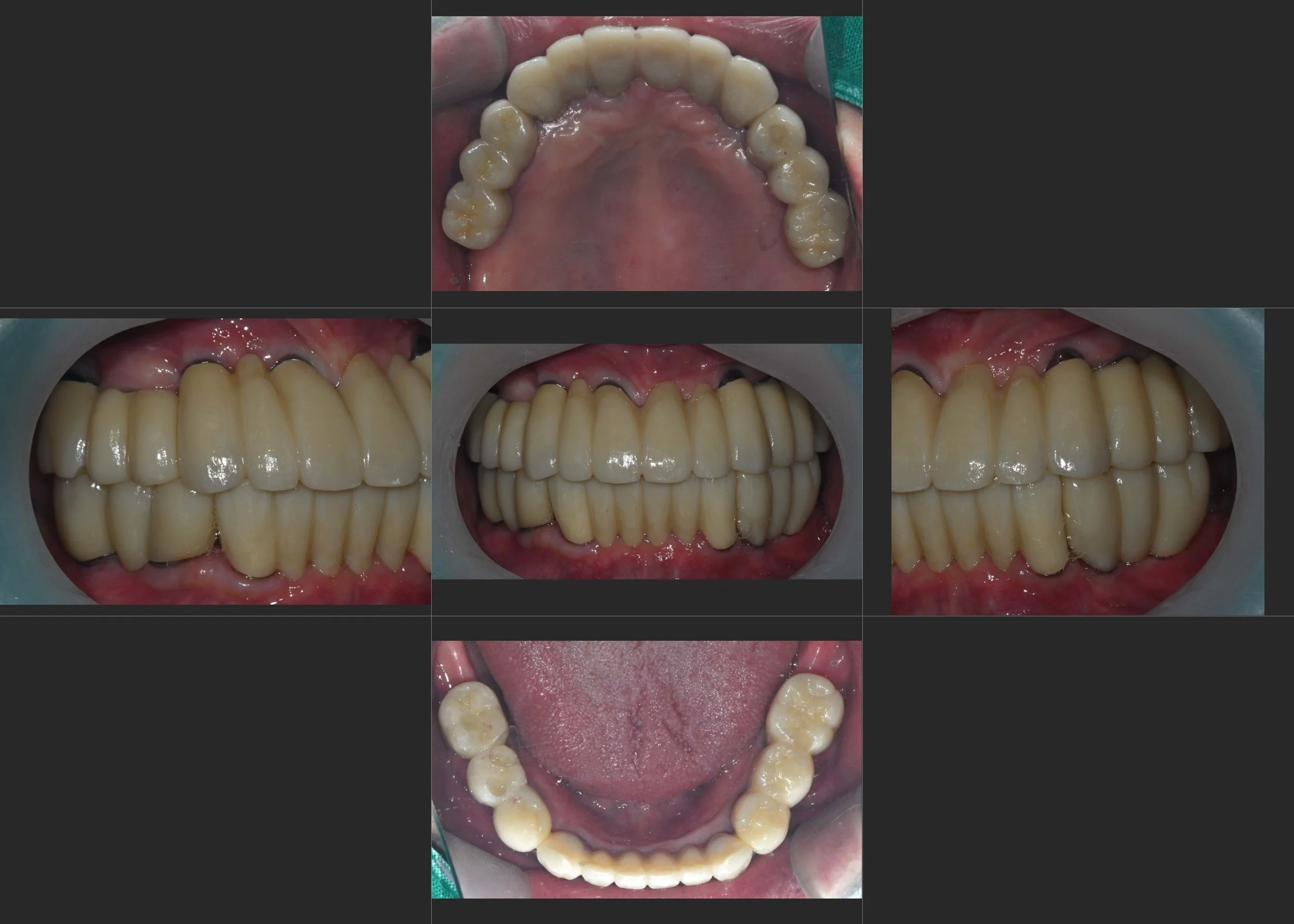
INTRA ORAL - AFTER
Treatment Approach
The rehabilitation was focused on transitioning from a state of total collapse to a predictable, maintainable fixed state:
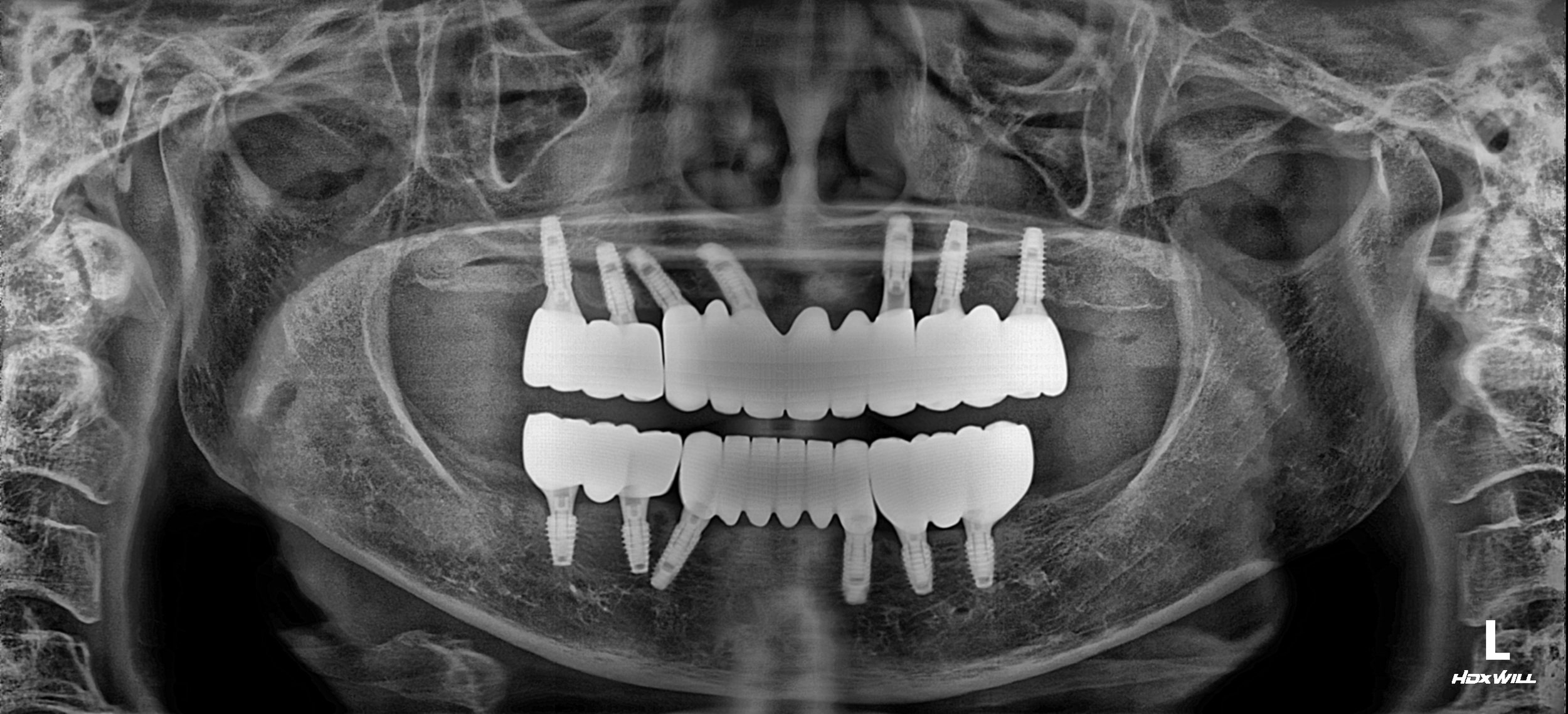
Surgical Phase: Comprehensive extractions were followed by the strategic placement of dental implants in both arches. In areas of severe bone loss, guided bone regeneration was utilized to ensure adequate primary stability and long-term integration.
Segmented Prosthetic Philosophy: While a one-piece "Full-Arch" bridge was a viable option, a 3-segment design was intentionally chosen for this case. By dividing the arch into smaller segments, we provided several critical advantages:
Ease of Maintenance: Better access for interproximal cleaning and hygiene management.
Mechanical Reliability: Reduced risk of massive failure; if a localized issue occurs, it can be addressed without compromising the entire arch.
Passive Fit: Improved precision in the prosthetic fit across the resorbed ridges.
VDO Stabilization: The patient’s occlusal height was restored, providing necessary support for the facial tissues and restoring masticatory power.
Final Delivery: High-precision zirconia bridges were delivered in the segmented configuration. The result is a functional, stable, and highly aesthetic outcome that the patient can confidently maintain for years to come.
