
17. Reconstructing Class III Malocclusion: A Strategic Approach to VDO Elevation
Case Summary
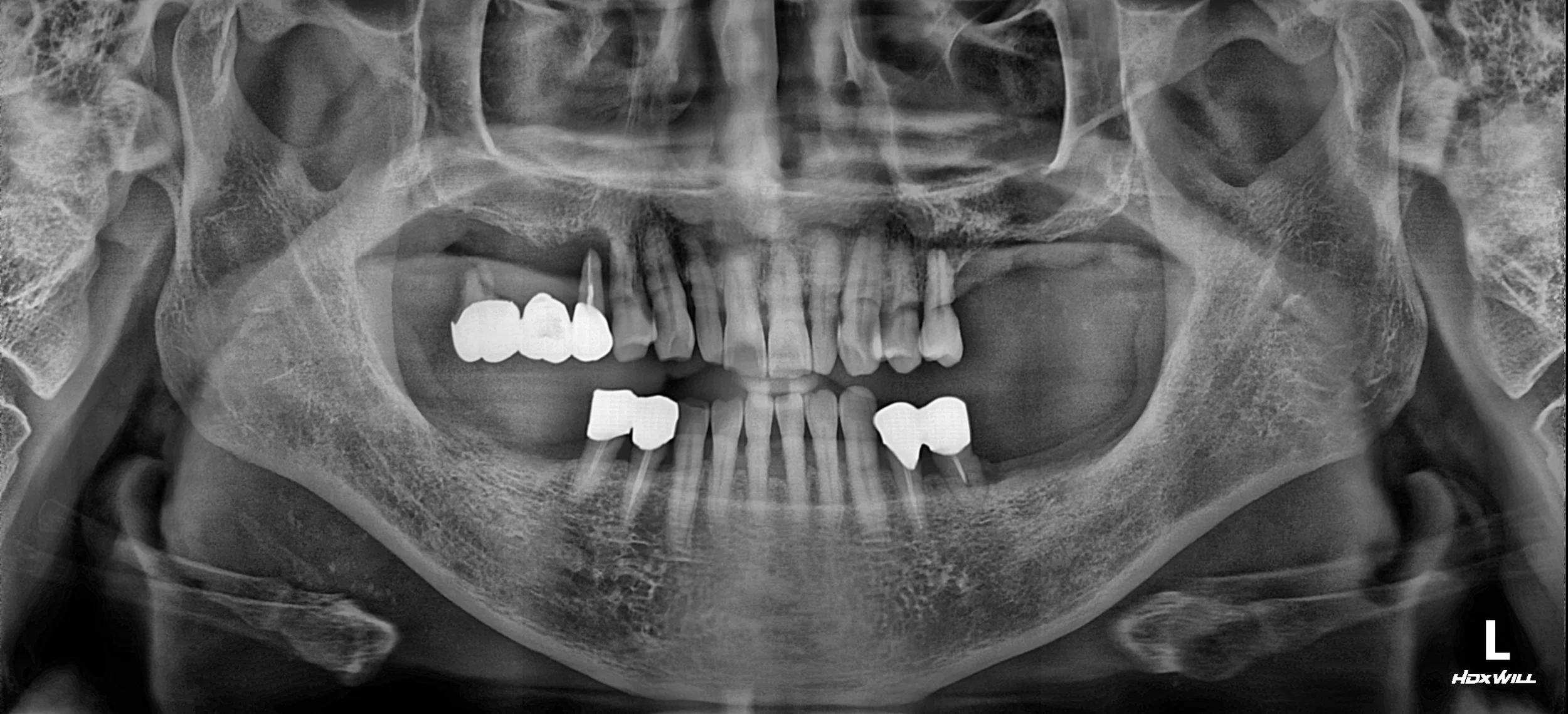
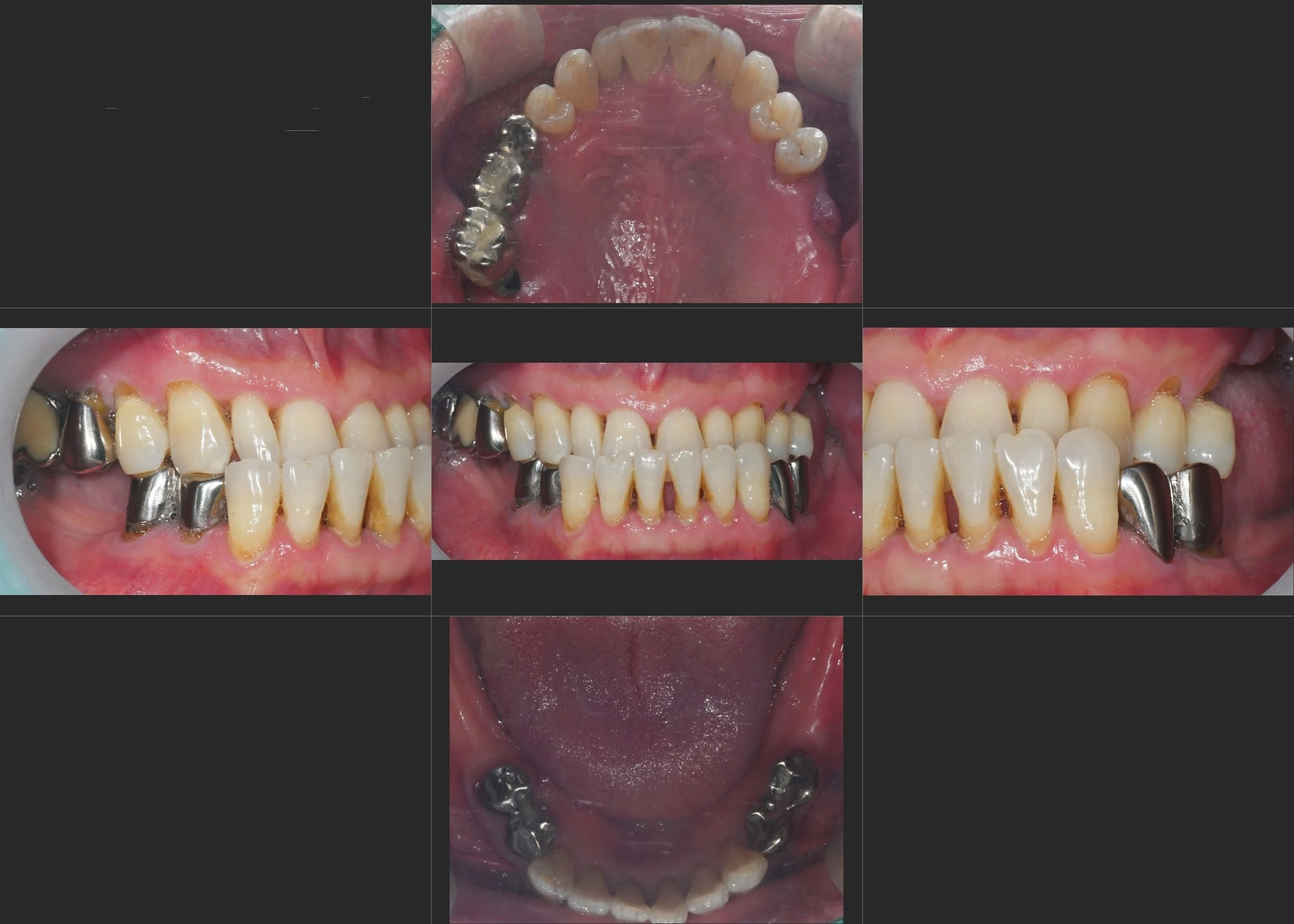
A male patient in his 50s presented with a severely compromised dentition and a history of failed dental rehabilitation. Having previously received partial dentures that were too uncomfortable to use, the patient had neglected further treatment, leading to:
Class III Malocclusion: A pronounced underbite exacerbated by posterior tooth loss.
Mandibular Deviation: Abnormal jaw shifting during closure due to lack of stable occlusal stops.
Insufficient Restorative Space: A collapsed Vertical Dimension of Occlusion (VDO) making fixed prosthetics challenging.
OPG - BEFORE
INTRA ORAL - BEFORE
Treatment Objectives
VDO Elevation: To create adequate vertical space for functional and aesthetic restorations.
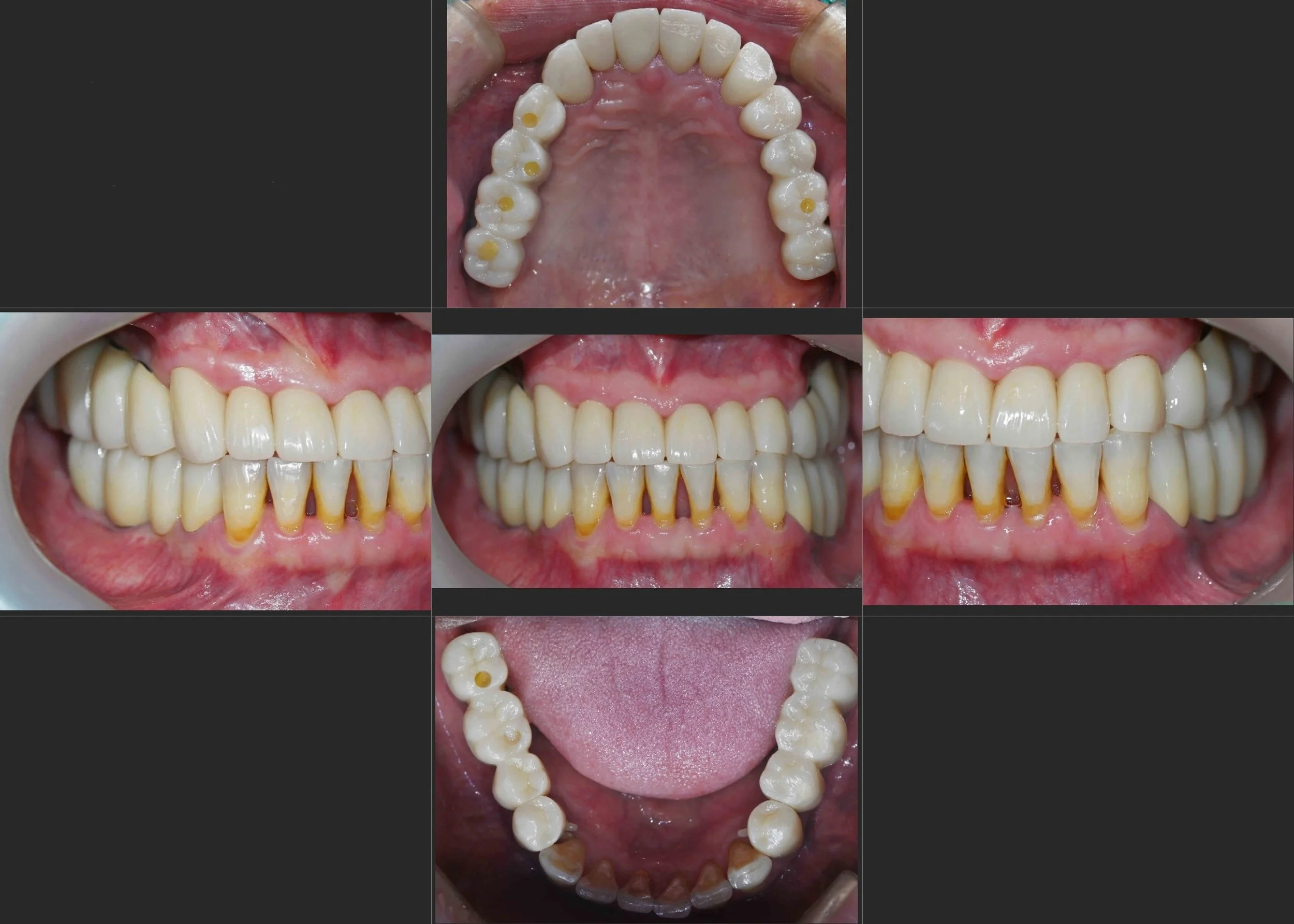
Bite Realignment: To transition the patient from a Class III underbite to a more neutral edge-to-edge relationship.
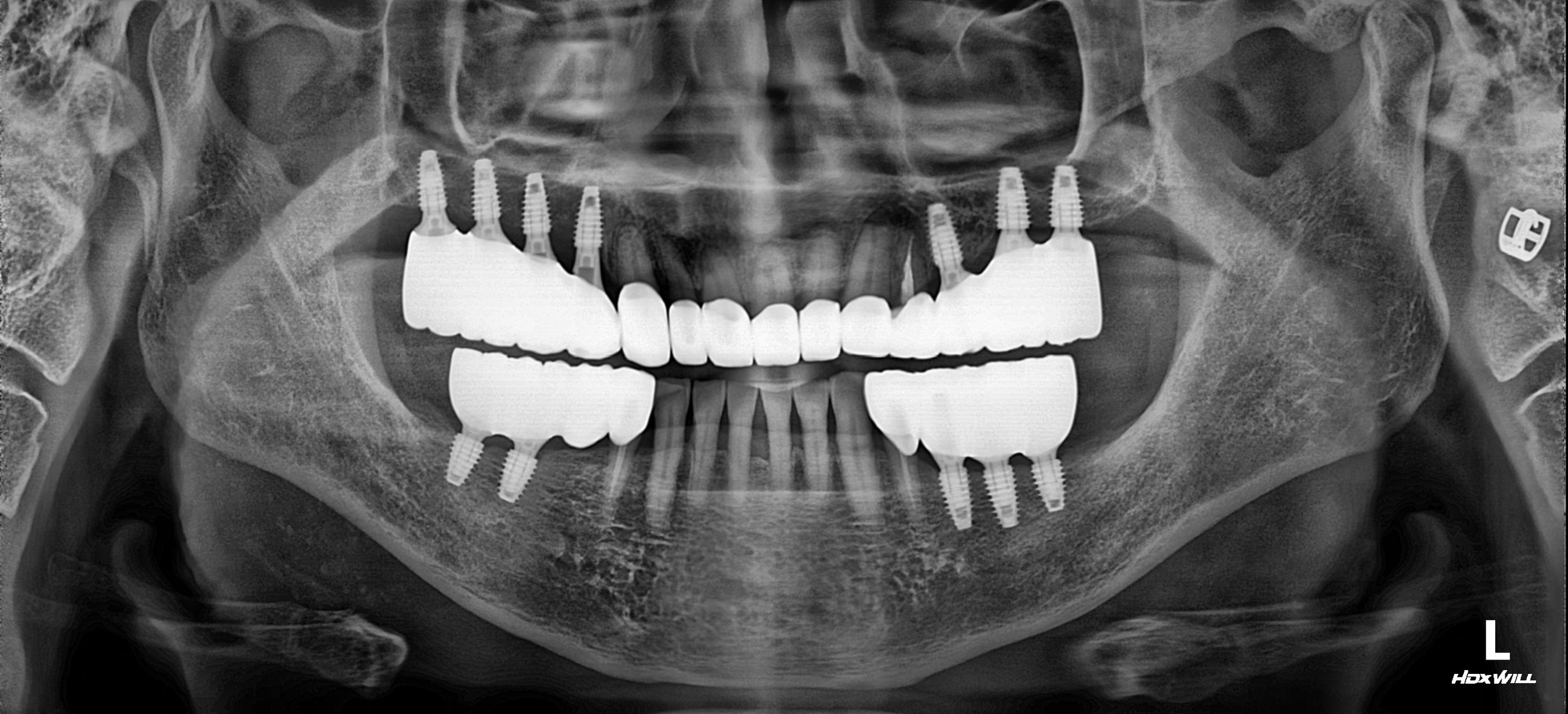
Sinus Augmentation: To provide sufficient bone height for implant placement in the severely resorbed maxillary posterior regions.
Functional Stabilization: To establish a repeatable bite position that prevents further mandibular deviation.
INTRA ORAL - AFTER
Treatment Approach
The rehabilitation required a careful balance between surgical foundation and prosthetic adaptation:
Surgical Phase: Bilateral maxillary sinus lifts were performed to facilitate the placement of implants in the posterior segments. This established the necessary foundation for the new occlusal scheme.
Occlusal Assessment: Following jaw relaxation (deprogramming) and clinical testing, it was determined that an edge-to-edge bite relationship was achievable. This position was selected to provide the most stable and reproducible centric relation.
Adaptation Phase: The patient was transitioned into temporary restorations at the newly elevated VDO. Over several months, the patient's neuromuscular system was monitored for adaptation to the edge-to-edge position. This phase was critical for ensuring comfort and long-term stability.
Final Delivery: Once stability was confirmed, the final implant-supported and tooth-supported prostheses were delivered. While not a "perfect" Class I occlusion, the height and positioning were meticulously set to prevent abnormal mandibular deviation, ensuring a sustainable and functional result.
The patient successfully transitioned from a state of total dental neglect and functional failure to a stable, fixed rehabilitation that has significantly improved his quality of life.
