
18. Comprehensive Geriatric Rehabilitation: Restoring Bilateral Function and Facial Symmetry
Case Summary
A 70-year-old female presented with a severely compromised oral condition resulting from long-term dental neglect. The primary clinical challenges included:
Severe Caries & Tooth Loss: Multiple missing units and extensive decay on remaining teeth had rendered functional chewing impossible.
Failing Prosthetics: Existing crowns and bridges were ill-fitting, leading to secondary caries and periodontal issues.
Unilateral Chewing & Asymmetry: Due to the lack of bilateral support, the patient had relied on one-sided chewing for years, resulting in a noticeable shift in the occlusal plane and subsequent facial asymmetry.
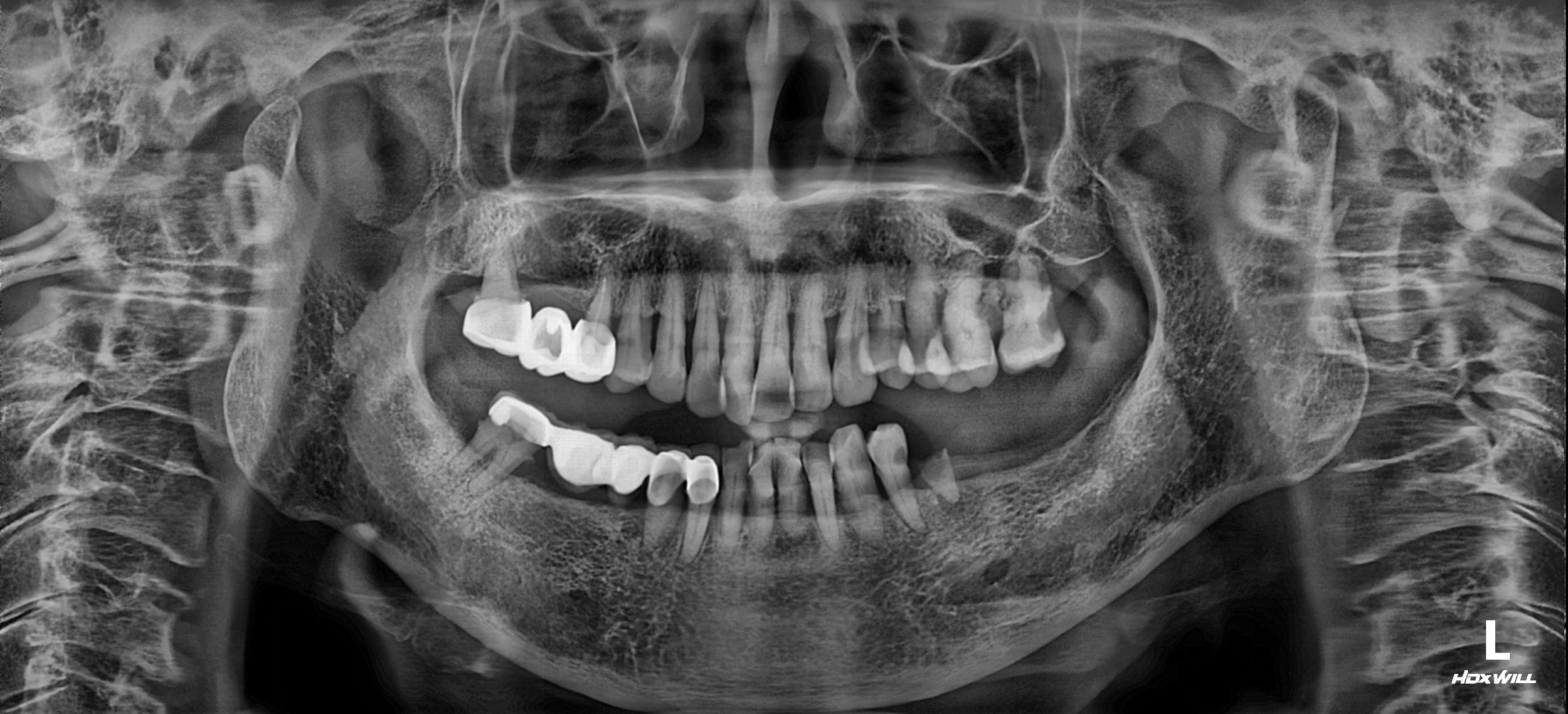
Pre-operative Radiograph (OPG) OPG showing multiple missing teeth, failing bridge abutments, and severe horizontal bone loss.
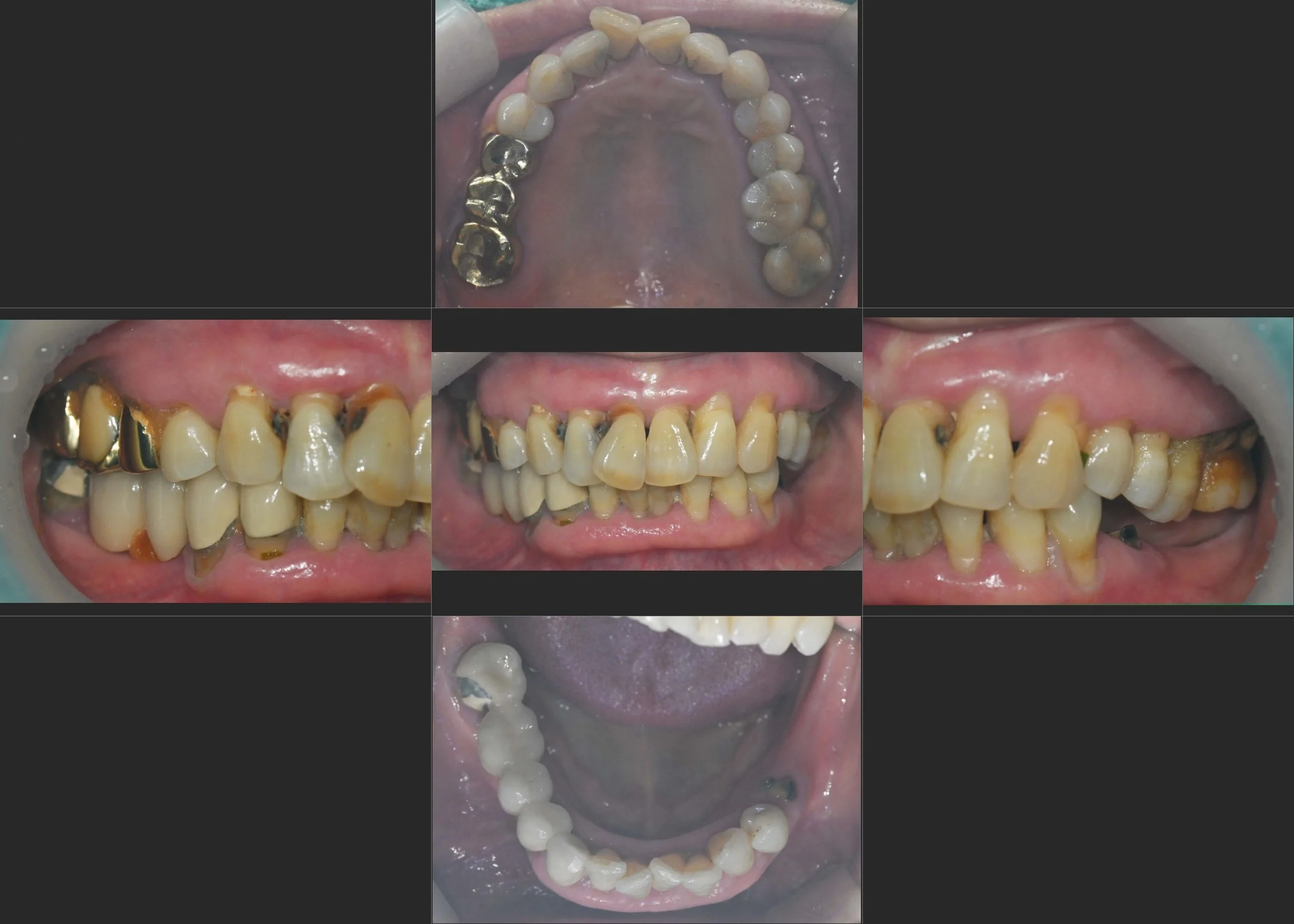
Pre-operative Intraoral Views Initial views revealing the extent of dental neglect, poor prosthetic condition, and collapsed posterior support.
OPG - BEFORE
INTRA ORAL - BEFORE
Treatment Objectives
Posterior Support Recovery: To re-establish stable bilateral posterior occlusion through strategic implant placement.
Infection Control: To eliminate active caries and replace failing restorations with stable abutments.
Symmetry Realignment: To correct the occlusal plane discrepancy caused by years of unilateral chewing.
Aesthetic Restoration: To restore the anterior segment using high-strength ceramic crowns, improving both the smile line and the patient's self-confidence.
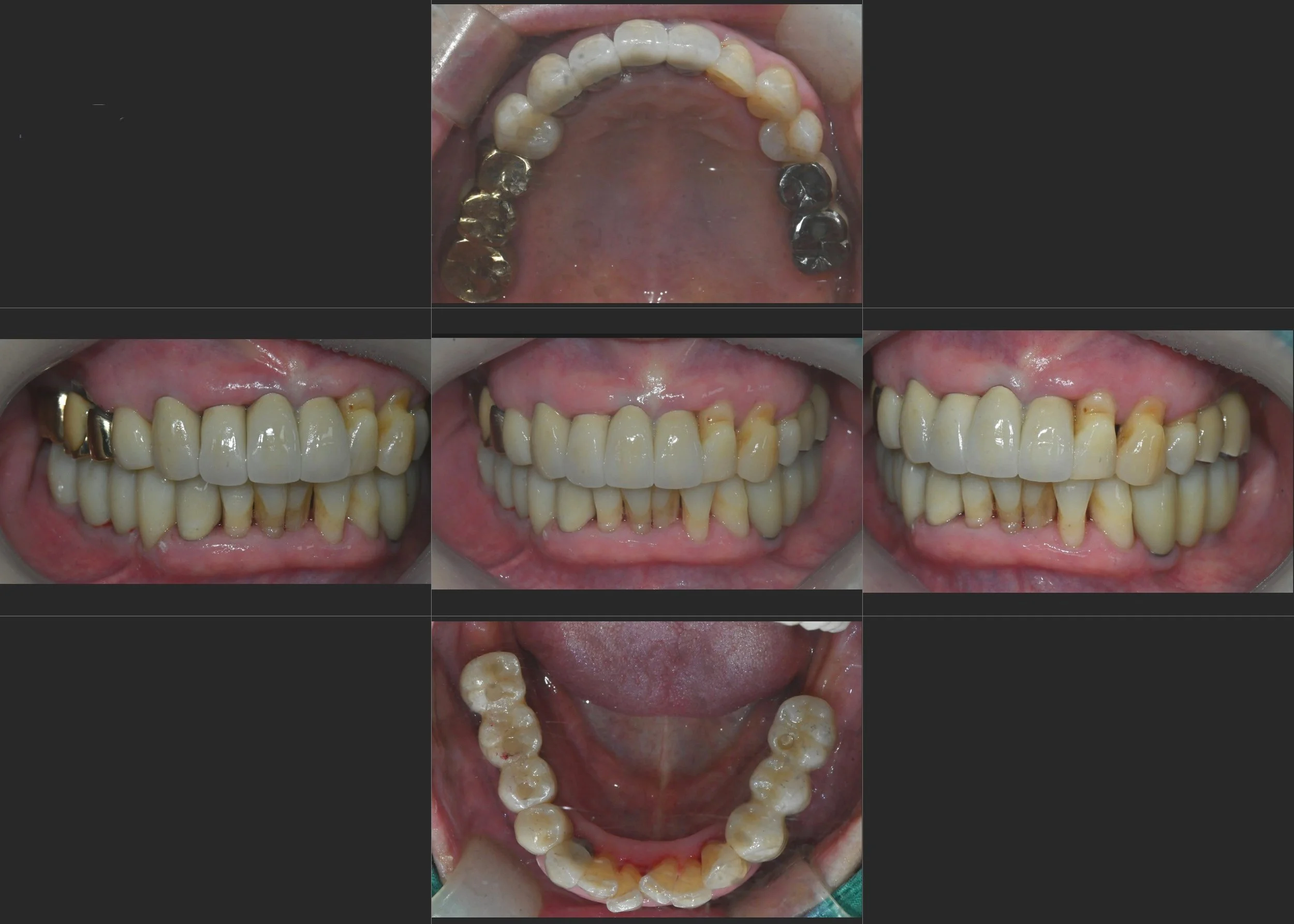
INTRA ORAL - AFTER
Treatment Approach
The rehabilitation was designed to provide a stable, long-term functional result for an elderly patient:
Initial Phase: Removal of non-restorable teeth and failing prosthetics. Temporary restorations were utilized to begin the process of balancing the bite and testing the new occlusal height.
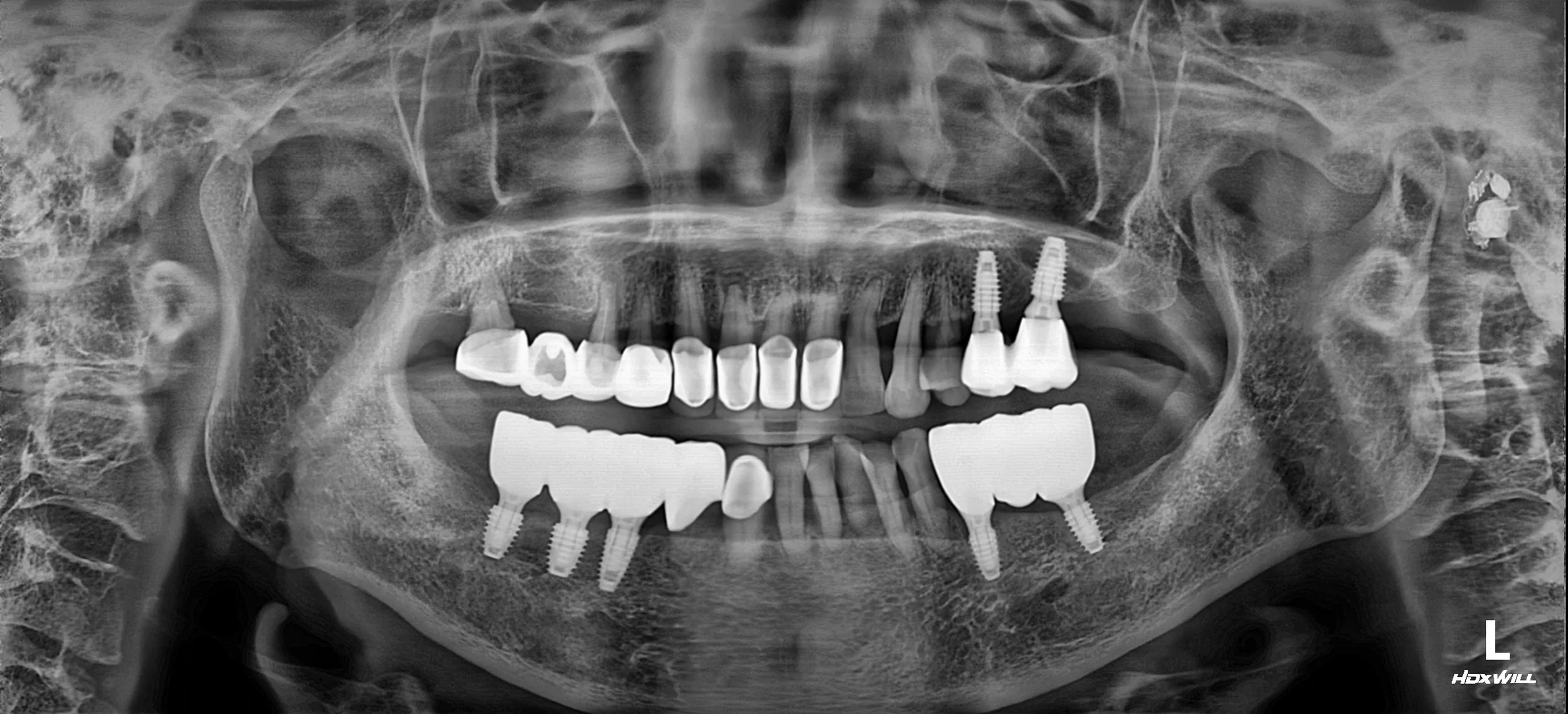
Surgical Phase: Dental implants were placed in the posterior regions of both arches. This was the most critical step to provide the "posterior stops" needed to stop the unilateral chewing pattern and redistribute occlusal forces evenly.
Prosthetic Realignment: Once the implants were integrated, the focus shifted to the anterior teeth. By coordinating the anterior crowns with the new posterior height, we were able to harmonize the occlusal plane and significantly improve the patient's facial symmetry.
Final Delivery: High-precision zirconia crowns and implant-supported bridges were delivered. The final result not only restored the ability to eat comfortably on both sides but also provided a naturally rejuvenated aesthetic appearance.
The patient experienced a significant improvement in quality of life, moving from a state of functional failure and aesthetic concern to a stable, symmetrical, and confident smile.
